In 2026, interlocking design focuses on clean layouts, practical surfaces, and materials that work well across patios, backyards, and driveways. Interlocking pavers allow you to create flexible spaces, clear transitions between areas, and long-lasting surfaces when installed properly. From subtle stone blends to bold pattern contrasts, you can choose layouts that suit both modern and traditional homes.
In this guide, we share current interlocking patio ideas, backyard layouts, and interlocking driveway designs that reflect how outdoor spaces are being planned today. If you want to improve access, define gathering areas, or create stronger curb appeal, a thoughtful interlocking design can help tie your entire property together.
Interlocking Patio Ideas
Today’s paver patio designs prioritize clean geometry and defined edges. Large-format pavers arranged in linear or modular layouts create a smooth surface that works well for seating, dining, and walkways.
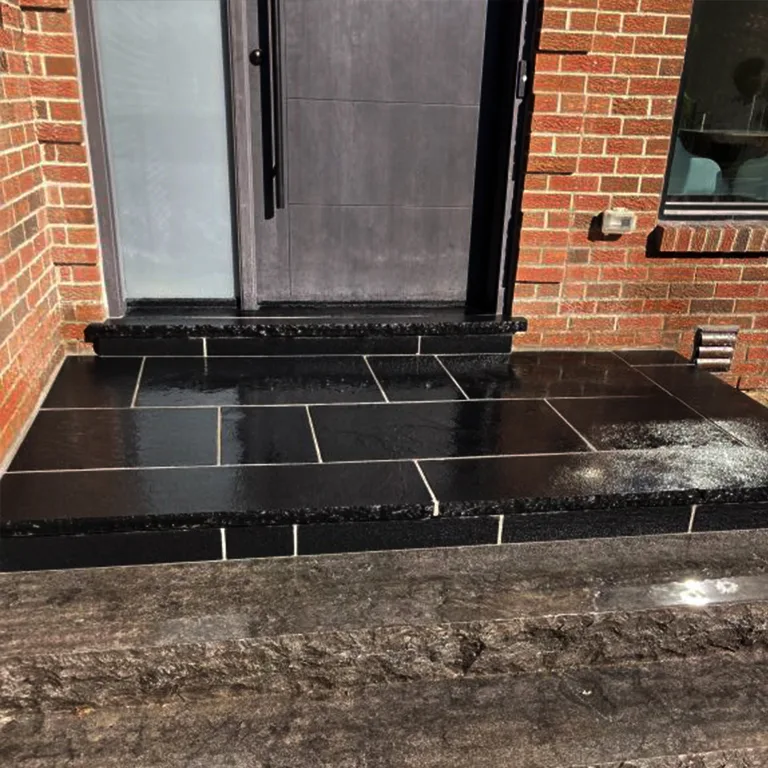
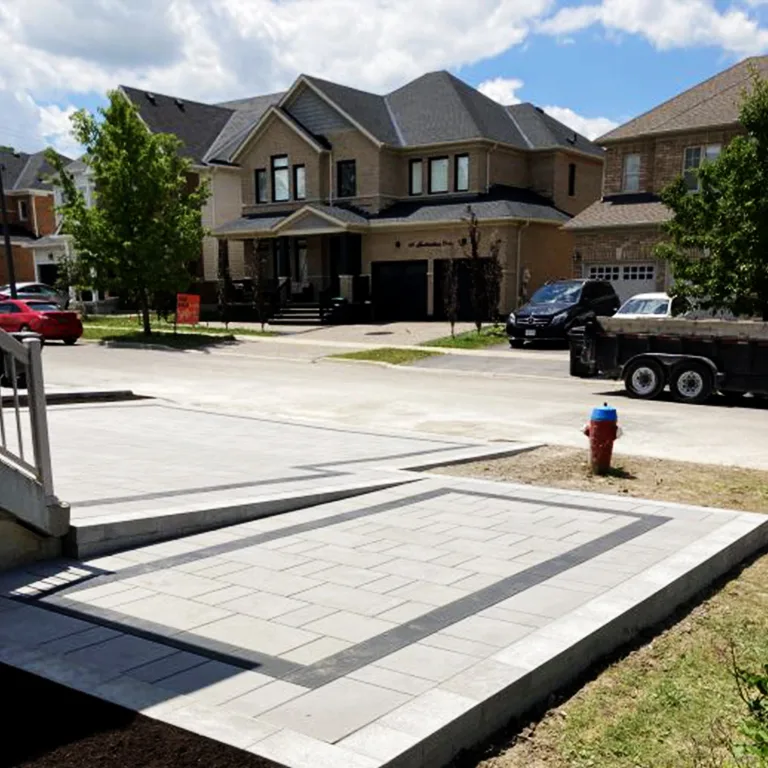
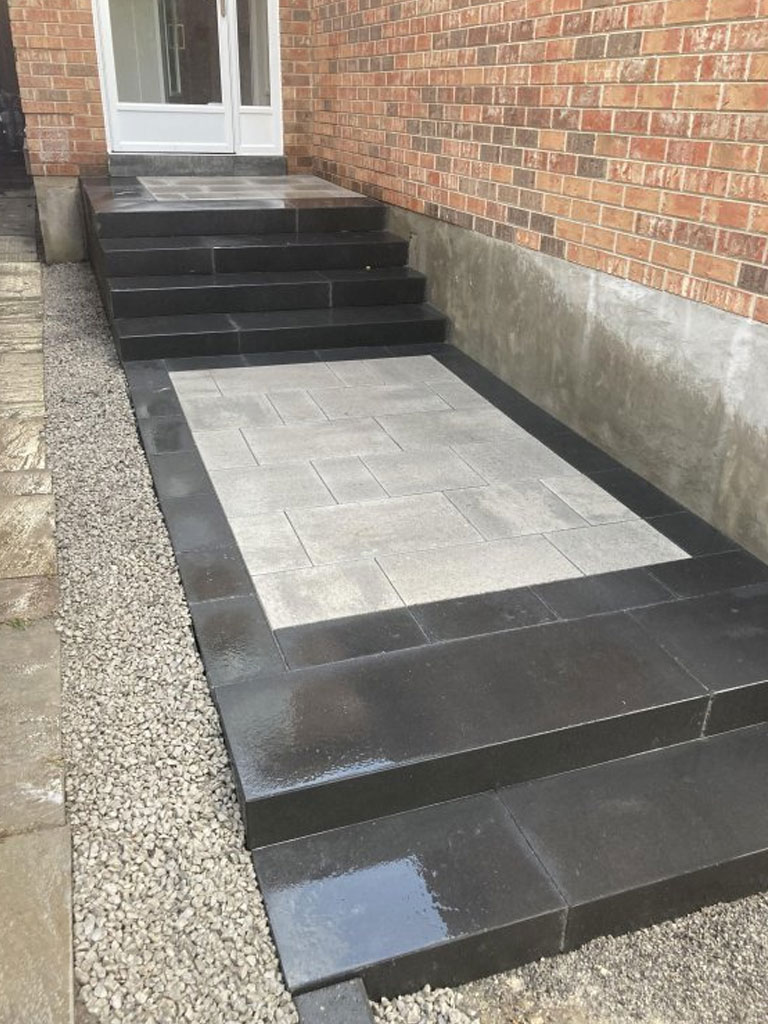
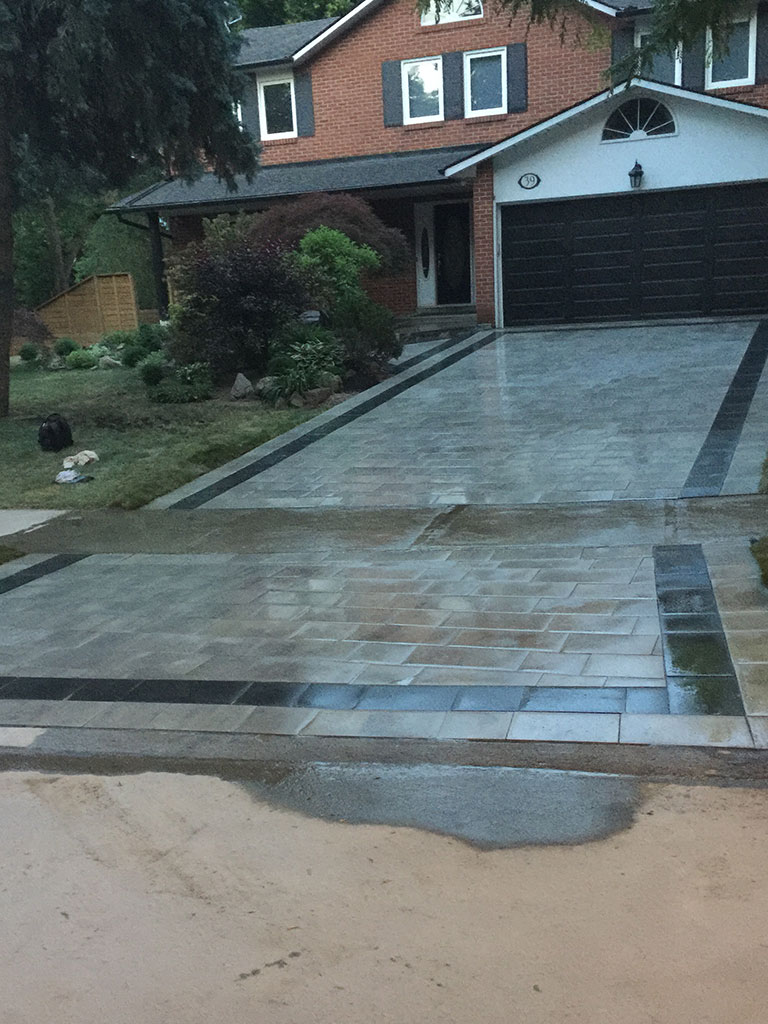
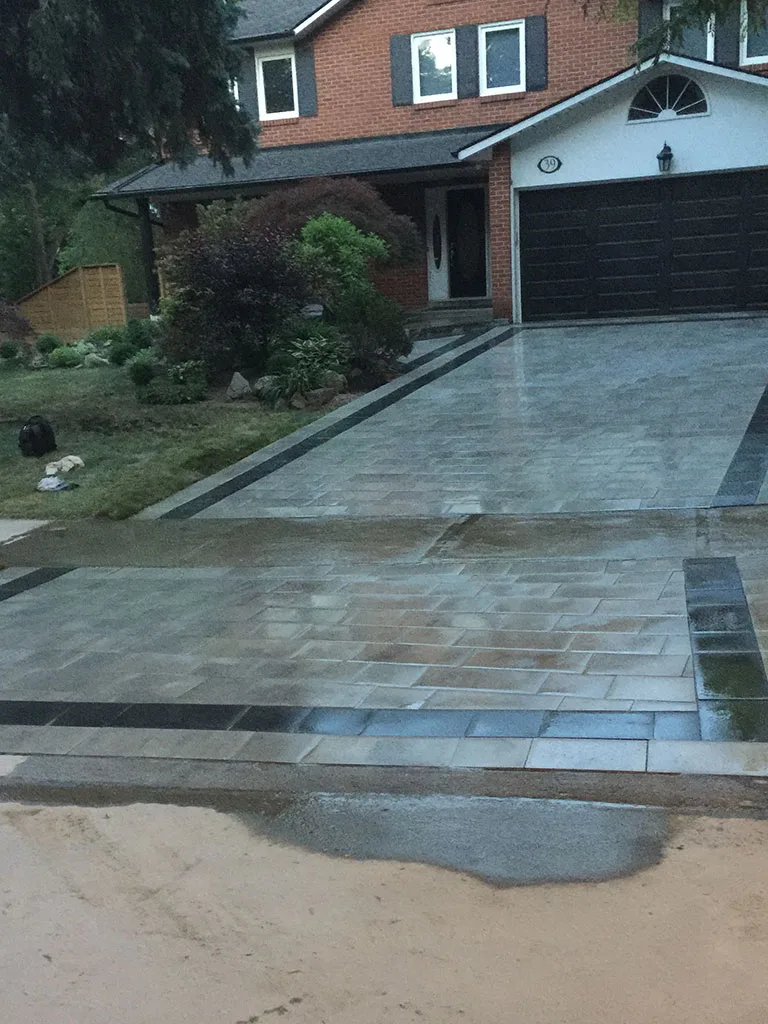
In this entryway design, dark-toned interlocking pavers are used to create a clean and structured landing area in front of the door. The rectangular stones are arranged in a linear pattern, while a darker border frames the steps and highlights the transition from the walkway to the entrance.
This type of layout works well for smaller patios, front entrances, or seating areas where you want a defined surface that complements the surrounding architecture.
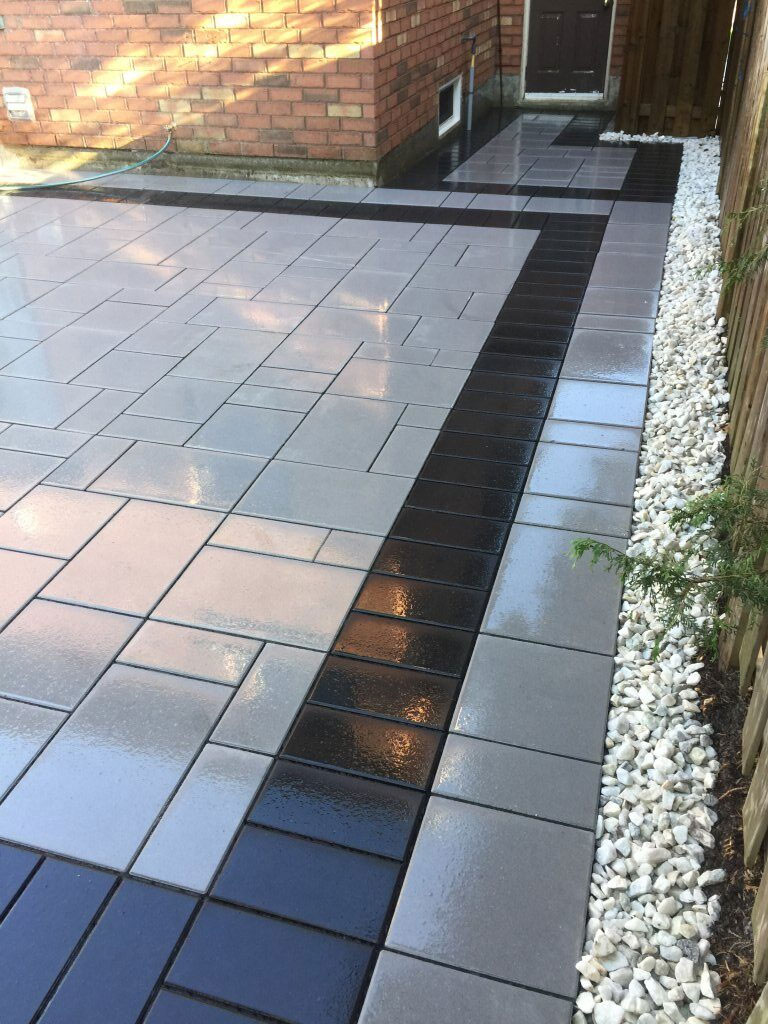
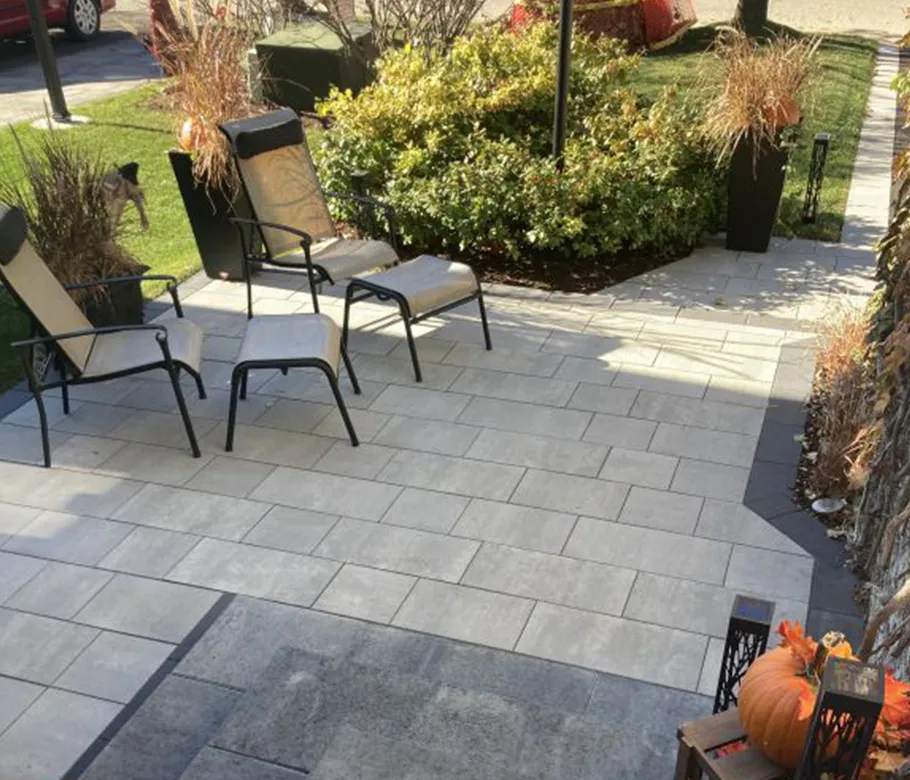
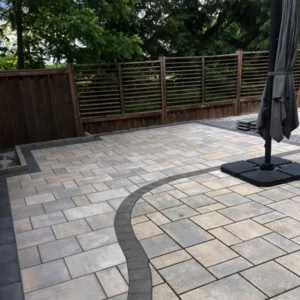
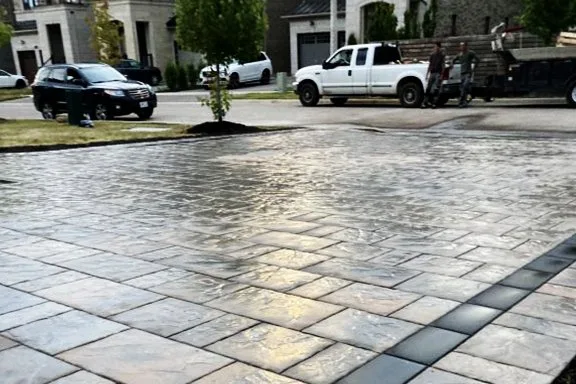
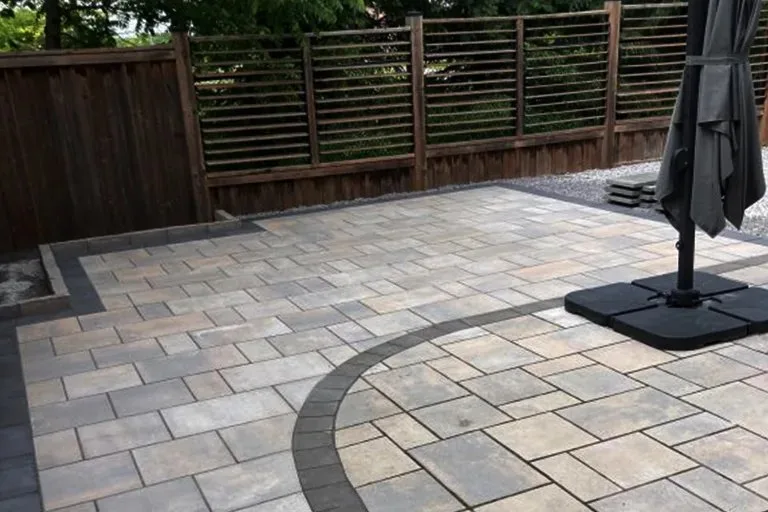
In this patio design, grey-toned pavers are arranged in a clean rectangular layout with a darker border outlining the edge of the surface. The contrasting border helps frame the patio and gives the entire area a structured appearance.
A couple favourite interlocking stone patterns for patios include random rectangular layouts and offset grid designs. These patterns create movement while keeping the overall layout balanced. If you prefer a structured finish, subtle colour blends in greys and charcoals work well and pair easily with outdoor furniture and surrounding landscaping.
For smaller patios, lighter-toned pavers can help your space feel more open. In larger areas, darker borders or inset bands help break up wide surfaces. Circular paver patterns are sometimes used as focal points beneath fire tables or seating zones, adding visual interest without taking over the layout.
Backyard Interlocking Applications
Backyards in 2026 are often planned with multiple functional zones. Interlocking pavers help you separate those areas in a clear and organized way. Walkways, seating pads, and open lounging spaces can all be created using the same paver style while changing the layout or border details.
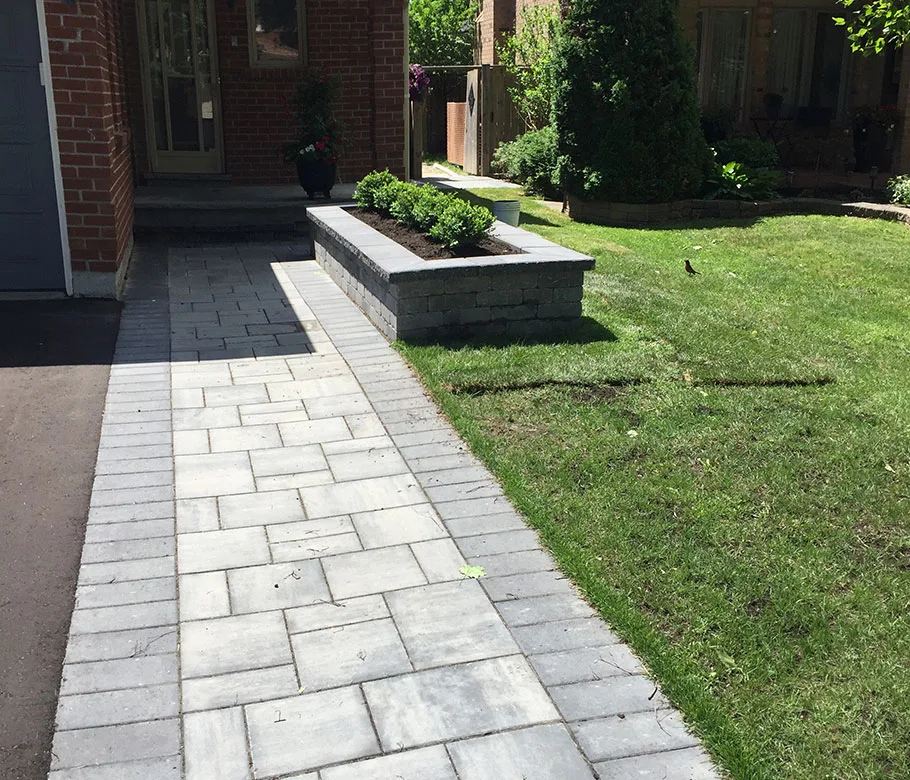
Straight-line interlocking brick patterns work well for walkways that connect patios to sheds, pools, or garden areas. These layouts provide stable footing and guide movement through the space. For seating areas, larger pavers arranged in a staggered layout create a smooth surface that is easy to maintain.
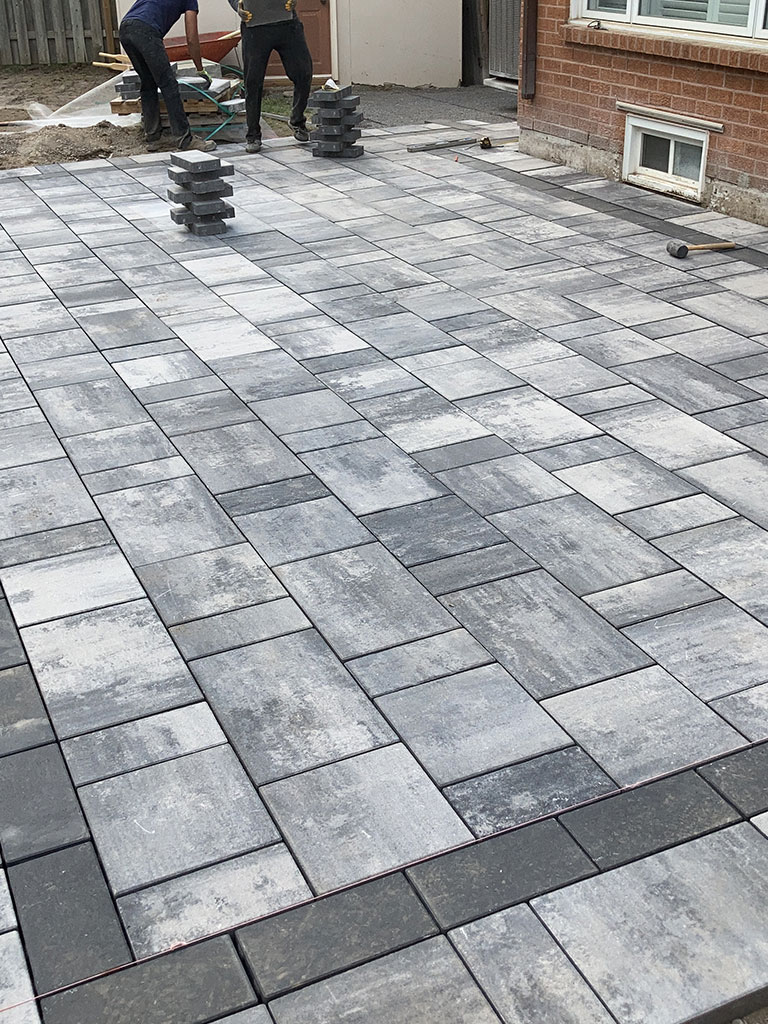
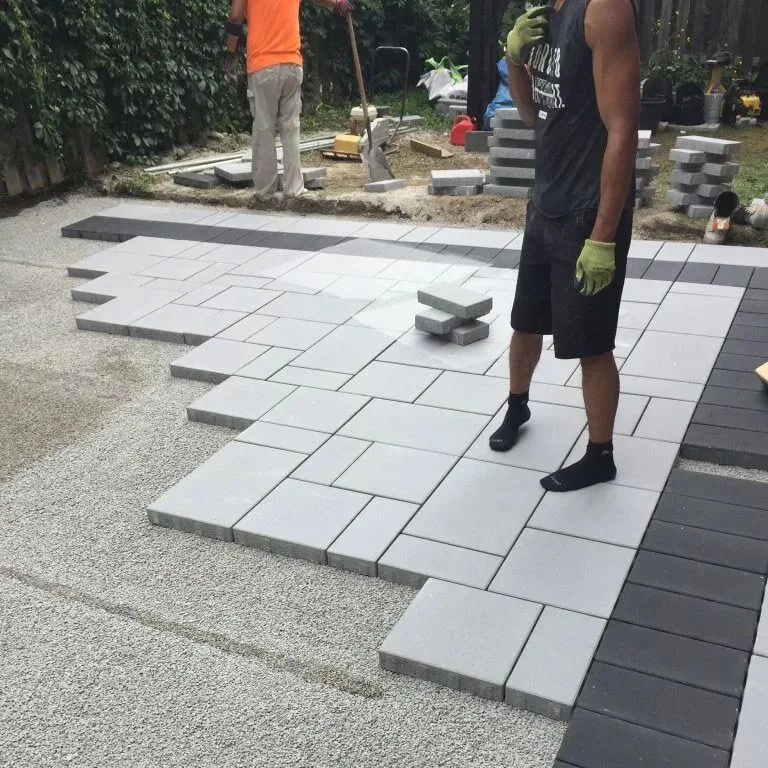
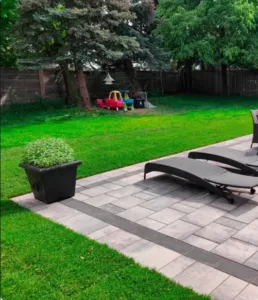
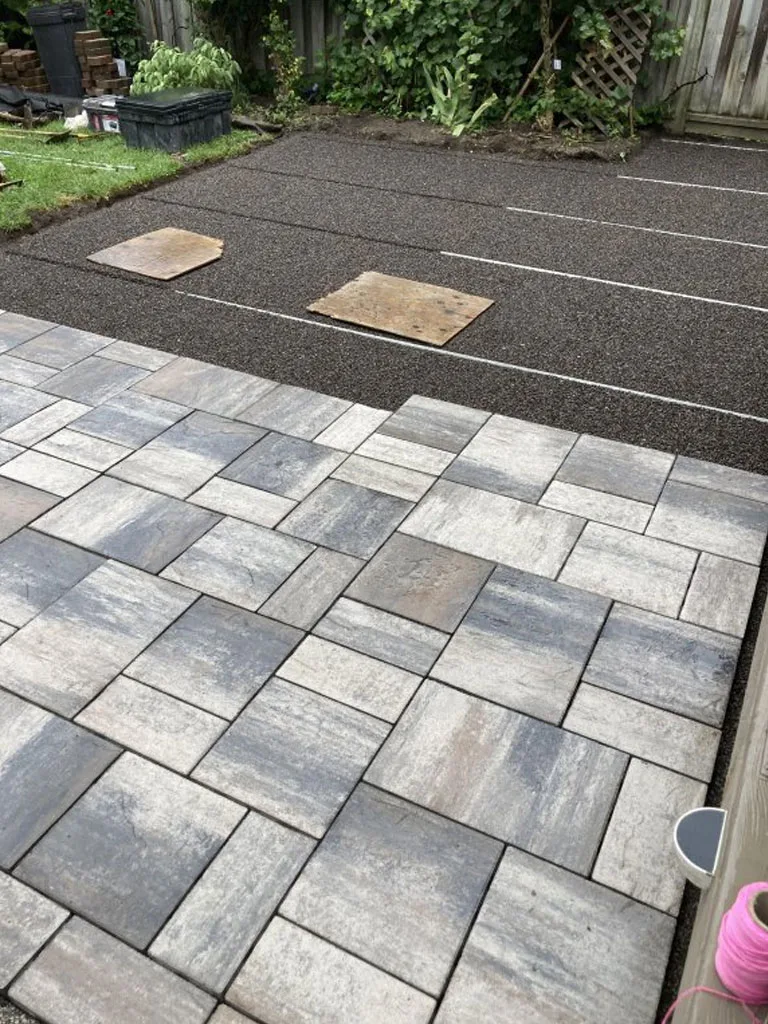
In this backyard installation, large rectangular and square pavers are arranged in a modular pattern using soft grey colour blends. The varied stone tones create visual depth while maintaining a balanced surface that works well for patios or lounging areas.
This type of paver patio design provides a smooth surface for outdoor furniture while still blending naturally with surrounding landscaping.
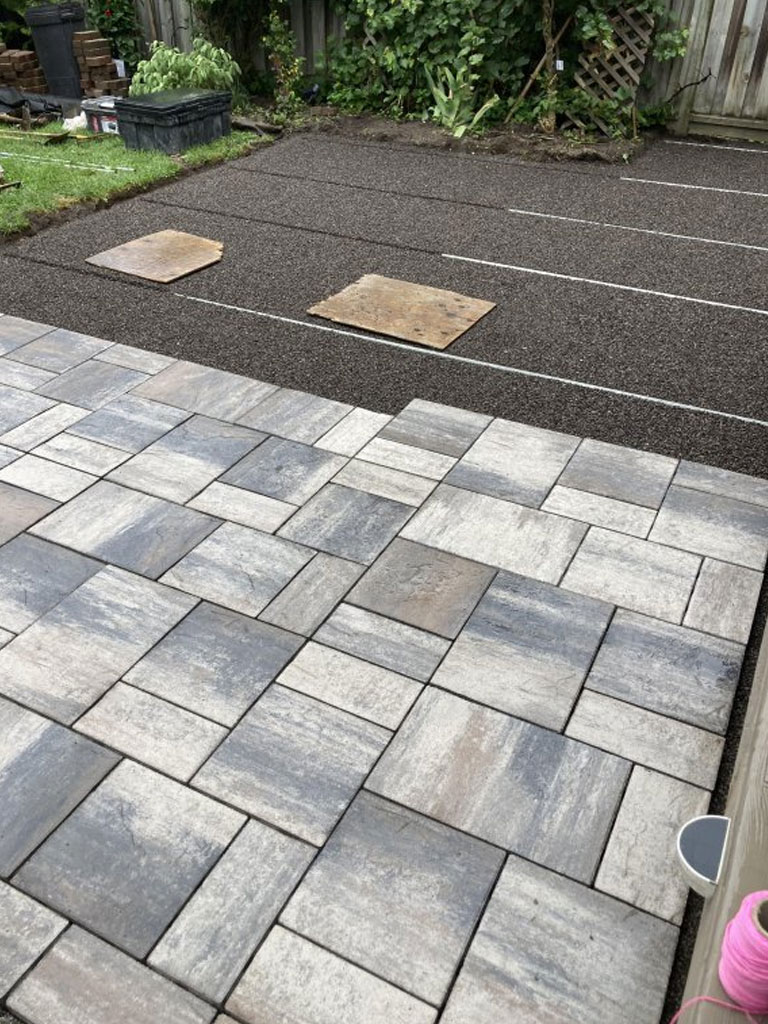
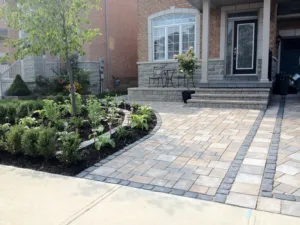
In this layout, backyard interlocking pavers form a walkway that connects different areas of the yard. The stones follow a straight pattern that naturally leads from the patio toward the surrounding garden space.
You may also consider adding subtle elevation changes. Small retaining edges paired with interlocking steps help separate dining areas from open lawn or garden zones. This helps organize the space while keeping the layout easy to move through.
Colour selection is usually kept neutral so plants and outdoor features stand out more. Soft grey blends remain popular, while darker accents are used sparingly to frame key areas. These concrete paver designs help maintain consistency across your yard without making the space feel overly structured.
Overall, backyard interlocking focuses on balance. The layout stays open and practical while still creating clearly defined spaces you can use throughout the season.
Interlocking Driveway Designs
Driveways continue to set the tone for the entire property. In 2026, interlocking driveway designs focus on pairing durability with structured layouts.
One of the most common choices remains herringbone pattern pavers. This pattern helps distribute vehicle weight effectively while keeping the surface stable over time.
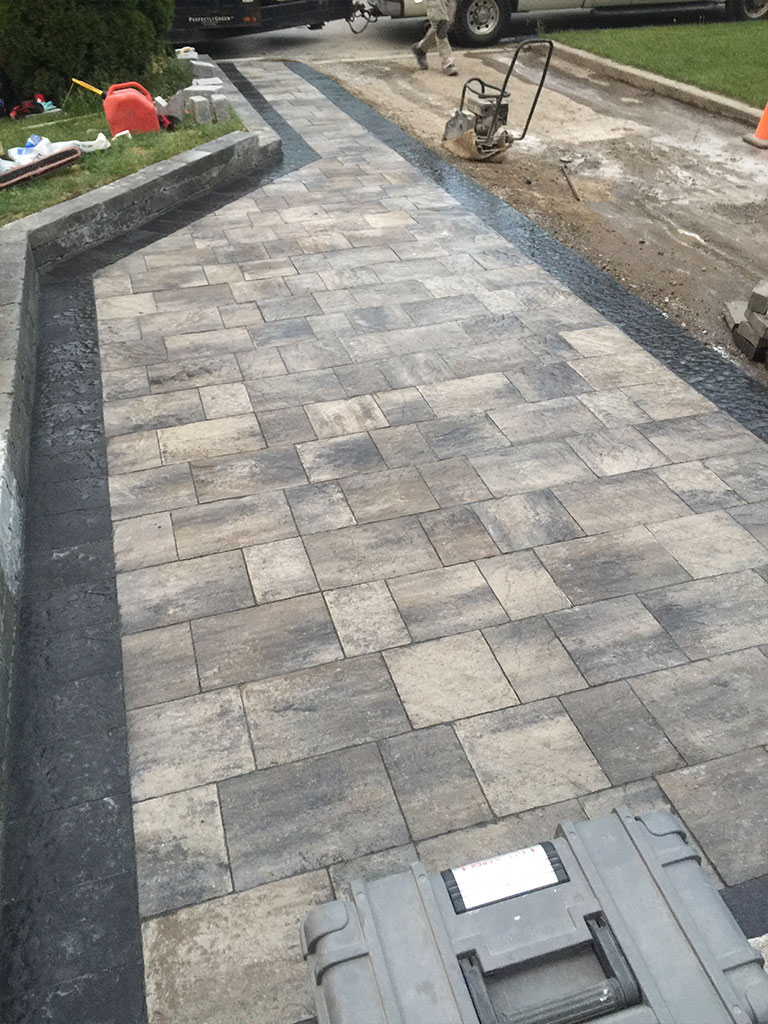
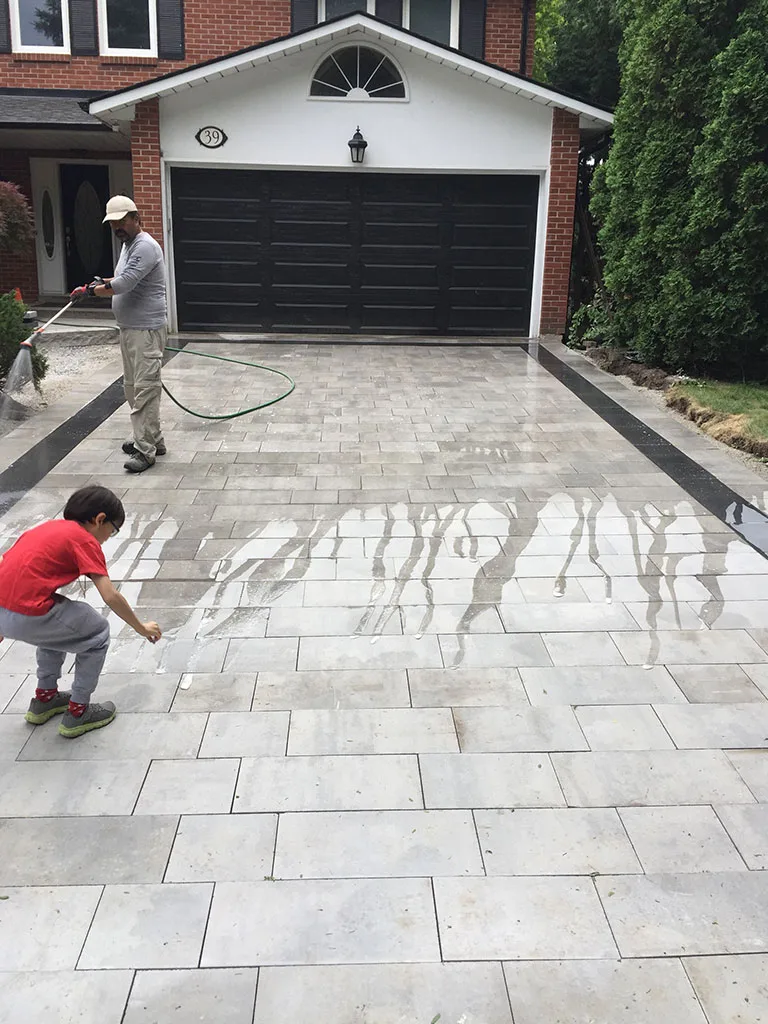
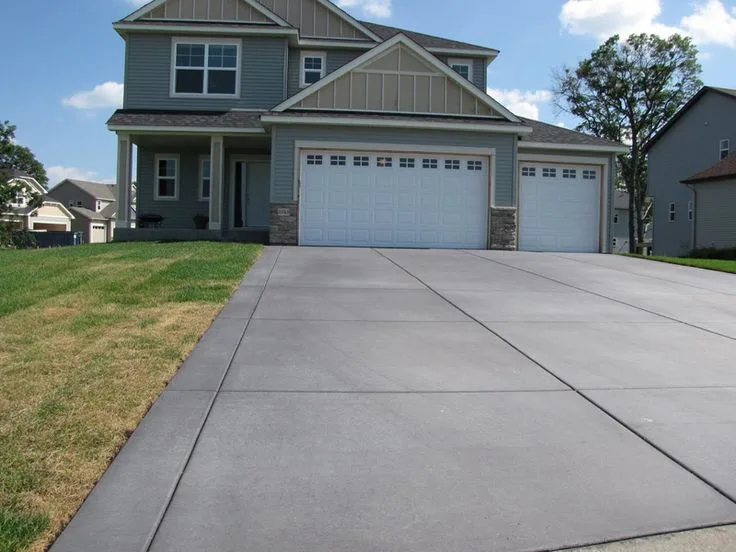
In this driveway design, rectangular grey pavers are installed in a structured pattern with subtle tone variations. The layout creates a clean surface, while the stone texture adds visual depth across the driveway.
For wider driveways, rectangular pavers laid in a modular pattern help reduce visual bulk. Borders in darker tones clearly define edges and separate the driveway from walkways or landscaping. These driveway paver ideas work well with both modern and transitional homes.
If you have a longer driveway, repeating patterns can help guide the eye toward the home. Interlocking walkway ideas are often incorporated alongside the driveway using the same pavers. This keeps the entire front area visually connected.
Drainage should also be considered during the design phase. Proper slopes combined with base preparation help prevent water from collecting on the surface. In some cases, permeable pavers are used in secondary parking areas to support water movement while still providing a strong surface.
These modern interlocking designs balance function and appearance, giving you a driveway that handles daily use while fitting naturally into the layout of your property.
Interlock Installation & Maintenance Tips
Even the best layout relies on proper installation. A well-prepared base, correct grading, and secure edge restraints all help support long-term performance.
Working with experienced installers helps prevent shifting or uneven settling over time. Routine maintenance is fairly simple. Occasional sweeping, rinsing, and joint sand touch-ups help keep the surface looking neat. Avoid harsh cleaners that could affect the stone colour. Addressing small issues early helps maintain alignment and appearance.
With proper installation and basic upkeep, interlocking pavers can continue performing well across patios, backyards, and driveways for many years.
FAQs
Which paver pattern works best for driveways?
Herringbone layouts are commonly used for driveways because they distribute weight effectively and resist movement.
Are interlocking pavers suitable for small backyards?
Yes. You can also opt for lighter colours and a clean layout to help your space feel more open and organized.
How long do interlocking pavers last?
With proper installation and routine care, interlocking pavers can last for decades.
Can different paver styles be mixed in one project?
Yes. Borders, accents, and varied layouts can be combined for contrast. We often mix different paver styles within one project while keeping the overall design consistent.
Do permeable pavers require special care?
Permeable pavers require occasional cleaning to keep the joints clear, but general maintenance is similar to standard pavers.
Final Thoughts
Interlocking designs continue to evolve with a focus on clean layouts, practical surfaces, and long-term usability. When you plan the layout carefully, patios, backyards, and driveways can work together to create a well-organized outdoor space.
At Shabatin Interlock, we help you explore the most popular interlocking design ideas for 2026 and choose the paver layout that fits your property. If you are planning an outdoor upgrade, contact our team today to help you determine the best approach for your space.
Interlocking projects across Toronto continue to see pricing changes in 2026 due to higher material costs, labour demand, fuel pricing, and supplier lead times. Homeowners comparing quotes are noticing wider pricing gaps between basic interlock installations and higher-end projects using premium stone or custom layouts. The lowest quote does not always reflect the long-term value of the installation, especially when base preparation, drainage, and material quality vary from contractor to contractor.
Understanding the interlocking cost per square foot in Toronto helps homeowners plan realistically while comparing installation quality, durability, and expected maintenance costs over time. Let’s dive in.
2026 Interlocking Price Per Square Foot Breakdown
The interlocking price per sq ft in Toronto depends on the material selected, the complexity of the layout, site access, and the amount of preparation required before installation begins. Driveways generally cost more than patios because they require deeper excavation and a stronger base capable of supporting vehicle traffic.
Below is a general 2026 pricing guide for residential projects in Toronto.
Standard interlocking pavers remain the most budget-conscious option for homeowners focused on functionality and curb appeal. These projects typically use basic stone shapes, straightforward layouts, and standard colour options. The interlock installation cost for standard pavers is usually lower because installation time and material costs are more predictable.
Mid-Range Pavers
Mid-range projects often include upgraded textures, mixed colour blends, borders, accent features, or more detailed laying patterns. These installations require additional labour and more time for cutting and layout work.
Premium and Natural Stone
Premium installations using natural stone or large-format slabs sit at the higher end of the market. The interlock stone price for these materials is significantly higher, and installation requires experienced crews familiar with specialty products and advanced grading techniques.
For homeowners asking how much does interlock cost in 2026, the answer depends heavily on both the product selected, and the preparation work hidden beneath the surface.
The “Hidden” Cost Drivers
Many homeowners compare quotes based only on visible stone products, but a large portion of project cost comes from what happens below the surface.
Size of Project and Location
Project size has a direct impact on pricing. Smaller projects can sometimes cost more per square foot because equipment, labour, and delivery costs are spread across less surface area. Larger driveways and backyard projects often benefit from better pricing efficiency, although overall project totals are naturally higher.
Location also affects pricing. Properties in dense urban areas may involve restricted access, permit requirements, limited staging space, or additional disposal costs. Sloped properties and homes with difficult excavation access may also require extra labour or specialized equipment.
The interlock driveway cost in Toronto can vary significantly between suburban and urban properties depending on grading conditions, drainage requirements, and accessibility. The same applies to interlocking backyard cost estimates, especially when retaining walls, steps, or outdoor living features are included in the design.
Excavation Depth
Excavation depth is one of the biggest technical cost factors. Driveways require a deeper and more stable base than patios or walkways because they must support vehicle loads throughout freeze-thaw cycles. Poor excavation often leads to sinking, shifting, and drainage problems within a few seasons.
Soil Disposal Fees
Soil disposal fees have also increased across Toronto in recent years. Removing excavated soil, broken concrete, or old asphalt can add noticeable cost depending on the volume and disposal location.
Specialized Drainage
Drainage work is another major factor. Some projects require additional grading, channel drains, or permeable base systems to manage water movement properly. While these upgrades increase upfront pricing, they can help reduce long-term repair costs caused by standing water or frost movement.
Material Trends Affecting 2026 Costs
One of the biggest trends affecting the cost of interlocking pavers in 2026 is the growing demand for permeable systems and environmentally conscious materials.
Permeable Pavers
Permeable pavers are designed to allow water to drain through joints and into the ground below rather than flowing directly into storm systems. By choosing this material, you can save on upfront costs since storm systems often require specialized base materials and more detailed installation methods.
Traditional Stone
Traditional interlocking stone remains the most common option for residential projects because of its familiar appearance, broad product selection, and lower initial pricing. However, homeowners dealing with drainage concerns or areas prone to water pooling are increasingly considering permeable options despite the higher starting cost.
Material availability is also influencing pricing. Some imported stone products continue to experience supplier delays and fluctuating freight costs, especially for premium textures and oversized slabs. Booking materials earlier in the season has become more important in 2026, particularly for custom projects or larger driveway installations.
For homeowners focused on long-term value, spending more upfront on proper drainage materials and durable stone products often results in fewer maintenance concerns later.
Why DIY Interlocking Often Costs Double?
Many homeowners consider installing interlock themselves after comparing contractor pricing online. At first glance, the savings can appear substantial. In reality, DIY interlocking projects often end up costing more once repairs, regrading, and material replacement are factored in.
The most common issue is poor base preparation. After installation, a driveway or patio may look level immediately, but if the base is not compacted properly or the excavation depth is insufficient, the surface can begin sinking or shifting after the first winter.
Drainage mistakes are another frequent problem. Water that pools near the home or beneath the pavers can accelerate movement and frost-related damage. Fixing these issues often requires removing large sections of the installation and rebuilding the base entirely.
Many homeowners also underestimate the equipment and labour involved. Excavation, compaction, grading, cutting stone, and hauling materials require experience and specialized tools.
Professional installations focus heavily on the structural work beneath the stone surface. That preparation is what largely determines how the project performs five or ten years later.
Long-Term Value Starts with Proper Planning
Interlocking projects remain one of the most valuable exterior upgrades for homeowners in Toronto when installed correctly and planned with long-term performance in mind. While pricing in 2026 continues to rise due to labour demand, material costs, and supplier scheduling, a properly built driveway or patio can provide decades of durability with relatively low maintenance requirements.
Planning ahead has also become more important. Many contractors now schedule major projects months in advance during peak spring and summer seasons, especially for larger driveways and premium stone installations. Waiting until the busiest part of the season can limit material availability and installation timing.
If you’re considering a new patio, driveway, or outdoor living space, we here at Shabatin Interlock can help identify grading conditions, drainage requirements, and material options before construction begins. Working with our experienced contractors can also help prevent the long-term repair costs often associated with improper installation practices. Contact us today.
FAQs
Does the colour of the stone affect the final price?
Yes. Certain colours, textures, and blended finishes cost more due to manufacturing processes and material availability. Premium colour options and imported products generally increase the final project price.
How much does a standard 2-car driveway cost in 2026?
A standard two-car interlock driveway cost typically ranges from approximately $14,000 to $30,000+ in Toronto depending on the size, material selection, excavation requirements, and layout complexity.
Is sealing included in the initial installation cost?
In most cases, sealing is priced separately. We recommend waiting several months after installation before applying a sealer so the pavers and joint sand can settle properly.
Can I save money by doing the excavation myself?
This is usually not recommended. Improper excavation depth or grading can create major drainage and settling problems later. We prefer handling excavation directly because it affects the overall performance of the installation.
Is interlocking cheaper than concrete?
Standard poured concrete may have a lower upfront price in some cases, but interlocking systems are generally easier to repair and maintain over time. Individual pavers can be replaced without removing the entire surface.
Choosing the right surface for your outdoor spaces is an important decision for any homeowner. Walkways, driveways, and patios all face heavy use, freeze–thaw cycles, and changing ground conditions. Two of the most common options are interlocking pavers and poured concrete.
In this guide, the Shabatin Interlock team breaks down interlock vs concrete in clear terms, covering appearance, cost, durability, and upkeep. Learn more how to make a confident choice that fits your property and how you use it.
What Is Interlock Pavers?
Interlocking pavers are individual concrete or stone units installed over a compacted gravel base and bedding sand. The pavers lock together through their shape and edge restraints rather than relying on a single solid slab. This flexible system is one reason many homeowners prefer concrete vs interlocking pavers for surfaces exposed to Canadian winters.
Interlock is available in a wide range of colours, sizes, and patterns. From clean, linear layouts to more traditional designs, it can be adapted to suit both older homes and newer builds. Because damaged pavers can be removed and replaced individually, repairs are usually localized rather than affecting the entire surface.
At Shabatin, we install interlock in Toronto for multiple applications, including driveways, walkways, and patios, making it a versatile option across your property.
What Is Poured Concrete?
Poured concrete is created by placing wet concrete into a framed area and allowing it to cure into a solid slab. It can be finished in several ways, including broom-finished, exposed aggregate, or stamped patterns that mimic stone.
Concrete is often chosen for its clean look and faster installation process. For homeowners focused on initial budget, concrete installation cost can be lower than interlock, especially for large areas like driveways. However, once concrete cracks, which is common over time, repairs are more visible and often require patching or replacement of sections.
Interlocking or Concrete for Walkway, Driveway, Patio?
Each outdoor space has different demands. Understanding how each material performs in specific areas can help narrow your decision.
Walkway Interlocking vs Concrete
Walkways are about safety, appearance, and ease of repair. Interlock provides better traction in wet or icy conditions and allows for spot repairs if shifting occurs. For many homeowners comparing interlock vs concrete walkway options, interlock’s flexibility is a strong advantage, especially in areas with tree roots or uneven ground.
Driveways experience the most weight and stress. Interlock can handle vehicle loads when installed on a properly prepared base and allows for repairs if settling happens. Concrete driveways can look sharp when new, but cracks are difficult to hide.
When weighing interlock vs concrete driveway options, consider long-term maintenance rather than just upfront price. Interlock may cost more initially, but it can be easier to maintain over decades.
Patios are often the most design-focused space. Interlock offers more flexibility for patterns and future layout changes. Many homeowners comparing interlock vs concrete patio surfaces lean toward pavers for this reason. Concrete patios are simpler and can work well for minimal designs, but they offer less adaptability over time.
The cost difference is one of the most common questions homeowners ask. The numbers below are average estimates based on industry research and typical GTA conditions. Actual pricing can vary depending on site preparation, access, drainage requirements, and design choices.
Surface Type
Average Cost per sq. ft.
Notes
Interlocking Pavers
$15–$30
Includes base prep, pavers, and labour
Poured Concrete
$10–$20
Depends on finish and thickness
Homeowners often ask which is cheaper interlock or concrete. Concrete usually has the lower upfront cost, while interlock may reduce repair expenses over time. When reviewing an interlock vs concrete cost comparison, it helps to think beyond installation and factor in maintenance and lifespan.
Durability is where the materials truly separate. Interlock systems are designed to flex slightly with ground movement. If settling occurs, pavers can be lifted, the base adjusted, and the surface reset. Maintenance typically involves joint sand replacement and occasional cleaning. Over the long term, interlock installation cost can be offset by easier repairs.
Concrete is rigid. Once it cracks, water can enter and widen damage during freeze–thaw cycles. Repairs often remain visible, and full replacement may be required after years of use. While concrete installation cost may be lower at the start, maintenance challenges can add up.
For homeowners focused on longevity, understanding interlock vs concrete pros and cons is essential before committing to either option.
How to Choose the Right Option for Your Home
The best choice depends on how you use the space, your budget, and your expectations for long-term care. Ask yourself:
Is flexibility and repairability important?
Will the area experience heavy loads or frequent use?
Are you planning future changes to the layout?
If you value design variety and long-term adaptability, interlock is often the better fit. If you prefer a straightforward surface and lower initial expense, concrete may suit your needs. Many homeowners asking is interlock better than concrete ultimately decide based on how long they plan to stay in their home and how much maintenance they are comfortable with.
Patio Paving Options
There is no one-size-fits-all answer when comparing interlock and concrete for walkways, driveways, and patios. Each material has strengths, and the right choice comes down to performance, appearance, and long-term value. For homeowners in the GTA looking for guidance on best material for patio or driveway, working with an experienced interlocking contractor can make the decision much clearer.
If you’re considering interlock for your driveway, walkway, or patio, Shabatin can help you evaluate your options and plan a surface that suits your home and property. Reach out today to discuss your next interlocking project and get started with confidence.
Looking to upgrade your driveway in 2026? Interlocking driveways are topping the wish lists of Ontario homeowners — and it’s not hard to see why. Between their sharp appearance, long-lasting performance, and smart drainage, interlocking pavers offer more than just curb appeal.
In this guide, we’ll dig into the real cost of interlocking driveways in Ontario, how installation works, what kind of upkeep they need, and how long they actually last. Plus, we’ve rounded up answers to the questions we hear the most. Whether you’re planning a brand-new build or refreshing what you’ve already got, this post is your starting point.
What Is an Interlocking Driveway?
An interlocking driveway is built using individual pavers — typically made from concrete, natural stone, or clay — that fit tightly together to form a solid surface. What makes it different from poured concrete or asphalt? Flexibility. Each paver is placed by hand over a prepared base, making it easier to repair or adjust over time.
What Goes Into the Base?
The durability of an interlocking driveway isn’t just about the pavers you see on top. It’s all about what’s underneath:
Excavated subgrade: Soil is cleared and leveled
Gravel base layer: Crushed stone is compacted for strength
Bedding layer: A fine layer of sand cushions the pavers
Edge restraints: Keeps everything locked in place
Joint sand: Swept into the gaps for stability and weed prevention
How Much Does an Interlocking Driveway Cost in Ontario?
In 2026, Ontario homeowners can expect to pay $18–$25+ per square foot for an interlocking driveway. That number varies based on material choice, the complexity of the design, and site-specific factors like grading or slope.
Sample Pricing
Small Driveway (1-car): ~$9,000–$14,000
Medium Driveway (2-car): ~$14,000–$22,000
Large Driveway (3-car+): $22,000 and up
Optional Add-ons
Lighting features
Decorative edging or borders
Protective sealants
Driveway Size
Sq Ft Range
Average Cost
Small (1 car)
500–600
$9,000–$14,000
Medium (2 cars)
700–1,000
$14,000–$22,000
Large (3 cars+)
1,200+
$22,000+
*Note: Pricing may vary by location, slope, and site access.
Here’s what a typical interlocking driveway installation looks like — from first dig to final sweep.
Excavation – Soil and existing material are removed to the required depth.
Base Prep – Gravel base is laid and compacted in layers.
Bedding Sand – A layer of sand is smoothed and leveled.
Paver Laying – Interlocking stones are installed in the desired pattern.
Edge Restraints – Border is added to keep pavers locked in.
Joint Sand – Polymeric or regular sand is swept between the joints.
Final Compaction – Everything is vibrated and settled into place.
Timeline: 3–7 days depending on weather and site complexity.
How Long Will an Interlocking Driveway Last?
With proper care and solid prep, interlocking driveways last 25 to 35 years in Ontario’s climate.
Factors That Matter:
Soil & drainage
Base depth & compaction
Freeze-thaw resistance
Sand choice (polymeric resists weeds)
Maintenance Tips for Interlocking Driveways
A little care goes a long way when it comes to keeping your interlocking driveway looking fresh.
Seasonal Tips
Avoid harsh de-icing salts
Use plastic shovels for snow
Reseal every 3–5 years (if needed)
Weed & Sand Care
Reapply joint sand as needed
Use polymeric sand to resist growth
Annual Inspection
Check for shifting or heaving
Clean stains or oil spots quickly
FAQs for Ontario Homeowners
Q: Can interlocking driveways support trucks or RVs? Yes — if the base is built deep enough, they can handle heavy loads with no issue.
Q: Can I add lighting or other features? Absolutely. In-ground lighting is popular and can be integrated along edges.
Q: Does it need sealing? Optional, but sealing can help preserve colour and block stains.
Q: Will it shift over time? With proper edging and base prep, shifting is minimal and easily corrected.
Q: Can I DIY this project? It’s possible for small patios, but for driveways — especially in Ontario’s climate — we recommend hiring pros.
Is an Interlocking Driveway Right for You?
They’re not the cheapest option up front, but they’re one of the smartest in the long run — visually, practically, and financially. If you’re looking for a driveway that pulls its weight year after year, interlocking company Shabatin is worth serious consideration.
Short answer: Yes — extending your driveway can increase your property’s value, especially in urban and suburban areas across the Greater Toronto Area. Whether you’re adding width to fit another car, creating a second pad, or lengthening for trailer storage, the practical and visual upgrade pays off.
In high-demand zones like Mississauga, Toronto, and Richmond Hill improved parking can boost resale value by 5% to 10%, depending on the home type and street constraints.
Top Benefits of a Driveway Extension for Homeowners
If you’ve ever had to rotate cars in a cramped driveway or rely on the street for guest parking, you’ll understand the appeal immediately. Here’s what a driveway extension can offer:
Fits More Vehicles – Ideal for families with multiple drivers, rental suites, or work vans.
Cuts Street Congestion – Keeps cars off the curb — which matters in winter or tight neighborhoods.
Curb Appeal Boost – Symmetry and finished edges can make a big difference on first impression.
More Utility – Adds space for trailers, boats, or snowmobile parking.
Ideal for Multigenerational Homes – Accommodates more drivers under one roof without battles over space.
Reduces Conflict in Shared Driveways – Common in semi-detached homes across the GTA.
Yes, driveway extensions often increase property value — especially in parking-constrained neighborhoods.
Here’s Why:
In dense GTA areas, on-site parking is at a premium
Wider driveways reduce dependence on street parking
Families and buyers with multiple cars see it as a major perk
Appraisers often note hardscaping upgrades as part of curb appeal
📊 In listings tracked by local agents, homes with off-street parking options sold up to $50,000 higher than comparables with tight or single-lane access.
📣 Realtor Quote:
“Parking is a quiet dealbreaker — buyers won’t always say it, but they’ll walk away if they can’t comfortably park two cars.” — GTA Real Estate Agent, 2024
Not all extensions add equal value, though. Design, materials, and local zoning compliance all factor in.
What You Need to Know About Permits & Regulations in Ontario
Before you break ground, make sure your extension is legal. Here’s what to check:
Key Rules to Know:
Lot Coverage: Most cities cap how much hard surface can cover your front yard
Maximum Width: You may not be allowed to cover the full width of your lot
By-law #569-2013 (Toronto): Limits driveway size to no more than 50% of your front yard
Mississauga Driveway By-laws: Setbacks and slope control often apply
Permit Timelines: Typically 3–6 weeks, but faster with digital submissions
💡 Tip Box: In Toronto, you can’t extend a driveway to cover more than 50% of your front yard unless you qualify for an exemption or have a corner lot.
📋 DIY Note: Some cities require stamped drawings — professional help saves time and stress.
Best Materials for a Long-Lasting Driveway Extension
Here’s how popular driveway materials stack up for GTA conditions:
Material
Pros
Cons
Asphalt
Affordable, fast to install
Prone to cracking, lower visual appeal
Interlock
Long-lasting, easy repairs, stylish
Higher cost, more labour upfront
Concrete
Clean look, mid-price range
May crack, harder to repair sections
What Works Best in GTA Winters?
Interlock handles freeze-thaw cycles best
Concrete needs saw cuts for expansion
Asphalt may need re-sealing every 3–5 years
FAQ – Driveway Extensions in Ontario
Is a driveway extension worth it in the GTA? Yes, especially if you live in a busy or parking-restricted neighborhood.
Do I need a permit to extend my driveway in Toronto or Mississauga? Yes. Both cities have zoning bylaws that require permits for any expansion.
What is the maximum width I can extend my driveway to? Typically, no more than 50% of your front yard in Toronto; varies elsewhere.
Can I use gravel for a driveway extension in Ontario? Most urban zones restrict loose gravel. Use interlock, concrete, or asphalt.
What’s better — interlock or asphalt for extensions? Interlock costs more upfront but lasts longer and looks better. Asphalt is more budget-friendly.
How long does a driveway extension last? 20–35 years depending on materials and maintenance.
Ready to Add Space and Value to Your Driveway?
Whether you need extra parking, want to improve curb appeal, or just make winter mornings less stressful, a well-done driveway extension from Shabatin Interlock is a smart move in Ontario’s real estate climate.
Flagstone walkways are stepping back into the spotlight — and for good reason. With their timeless, organic look and sturdy reputation, they’re becoming a popular choice for homeowners across Ontario in 2026. Whether you’re building out a garden path, upgrading your front entrance, or refreshing a patio, natural stone delivers the kind of character that concrete just can’t fake.
But with so many hardscaping materials out there, it’s tough to pick one that holds up year-round without constant upkeep. In this post, we’ll walk you through everything you need to know about flagstone walkway installation — from stone types and cost breakdowns to installation tips, care advice, and FAQs.
What Is Flagstone?
Flagstone refers to a group of flat, natural stones — usually sedimentary — that are commonly used for outdoor surfaces like walkways and patios. What sets them apart? Their irregular, fractured look and natural split face, which gives each stone a one-of-a-kind texture and shape.
Bluestone – Strong and cool-toned; often from quarries in the northeast
Quartzite – Durable and slightly sparkly
Limestone – Soft greys and creams; lighter underfoot
Flagstone brings a raw, earthy vibe to outdoor spaces — which is exactly what makes it a favourite for natural stone walkways and irregular pavers in gardens, entryways, and patios.
Benefits of a Flagstone Walkway
🌿 Natural Aesthetic
Each stone is unique — no cookie-cutter feel. Blends effortlessly into gardens and wooded areas.
💪 Built for Longevity
With the right prep and base, flagstone can last decades. Handles Ontario’s freeze-thaw cycles well.
🧹 Easy Upkeep
Doesn’t crack like poured concrete. Occasional sweeping or rinsing is usually enough.
💧 Good Drainage
Dry-laid stone allows rain to drain through gaps. Reduces puddling and surface runoff.
👣 Safe Underfoot
Textured surface = natural grip (even when wet).
🔄 Layout Options
Random pattern, mosaic, or simple stepping stones. Can curve around garden beds or slope with terrain.
🏡 Best For: Front walkways, garden trails, side-yard paths, patios, and natural-style landscaping
Flagstone vs. Pavers or Concrete: Which Is Better?
Let’s break it down:
Feature
Flagstone
Pavers
Concrete
Aesthetic
Natural, unique
Uniform
Clean, modern
Cost
$$–$$$
$–$$
$
Lifespan
20–30+ years
15–25 years
10–20 years
Maintenance
Low
Moderate
Can crack
Slip Resistance
High
Medium
Low (when wet)
Bottom Line: Flagstone wins on looks and longevity — but it does come with a higher upfront price.
How Much Does a Flagstone Walkway Cost?
Here’s what Ontario homeowners can expect to pay in 2026:
🧱 Material Cost:
$15–$30 per sq ft (for quality flagstone slabs)
🛠 Installed Cost:
$35–$60 per sq ft (includes base prep, layout, and labour)
Taking care of a flagstone walkway is refreshingly simple — especially compared to concrete or asphalt.
Seasonal Maintenance:
Sweep leaves and dirt regularly
Hose it down every few weeks in summer
Weed Control:
Use polymeric sand or gravel to reduce growth
Edge your path to prevent grass creeping in
Resealing (Optional):
Every 3–5 years if you seal your stone
Choose breathable sealers made for natural stone
Winter Tips:
Avoid rock salt — use sand or calcium chloride
Flagstone holds grip well but clear snow regularly
Is Flagstone Right for Your Property?
Best Fits:
Homes with rustic, cottage, or craftsman character
Garden settings with trees, flowerbeds, or natural slope
Uneven or sloped yards (great for stepping stone layouts)
Might Not Be Ideal If:
You want a very minimal, polished look
Your budget is tight — natural stone is an investment
Common Flagstone Walkway Questions (FAQ)
Q: How long does flagstone last? A: Easily 20–30 years — more with proper care and installation.
Q: Is it slippery when wet? A: No. Flagstone has a textured, grippy surface that stays safe underfoot.
Q: Can I DIY a flagstone walkway? A: Smaller stepping stone paths, yes. Larger installs? You’ll want a pro for grading and base compaction.
Q: What’s the best base for flagstone? A: Crushed gravel base topped with stone dust or sand — it allows for drainage and flexibility.
Q: Should I seal my walkway? A: Optional. It protects against stains and makes cleaning easier, but natural stone looks great either way.
Our Flagstone Installation Services in Ontario
We’ve been installing custom stone walkways and patios across Toronto, Mississauga, Etobicoke and the GTA for over 20 years. Flagstone experts from Shabatin Interlock can help you choose the right stone, plan the layout, and build a walkway that will last for decades.
With changing times, a lot of interesting decorative landscaping elements have emerged that can make your home a spectacular beauty. The outdoor space of your home, comprising the lawn, driveway, and patio is what the guests first get to see the moment they enter through the main gate. Among the myriad landscaping elements, pavers stand out as an incredibly attractive landscaping component. They can instantly enhance the beauty of your outdoor space. The charm and appeal of interlock driveway has what made them a popular choice for homeowners. And, today there are many companies offering top-notch driveway interlocking services in Toronto.
Interlock driveways, characterized by their intricate patterns and durable structure, have gained popularity as a go-to choice for most homeowners. While their aesthetic charm is undeniable, interlock driveways offer a host of other benefits that go beyond mere looks. Here are some incredible benefits of driveway interlocking.
Benefits of interlock driveway
Durability and Longevity: One of the standout features of driveway interlocking is its remarkable durability. The interlocking pavers are made from high-quality materials like concrete, brick, or natural stone, which are designed to withstand heavy loads and resist cracking. This durability ensures that your driveway can handle the weight of vehicles without showing signs of wear and tear for years to come.
Design Versatility: Interlock driveways offer an incredible range of design possibilities. The pavers come in various shapes, colors, and patterns, allowing homeowners to create unique designs that complement their homes’ architecture and landscape.
Ease of Repair: In the unfortunate event that a section of your interlock driveway gets damaged, repairs are relatively straightforward. Unlike poured concrete driveways that might require replacing the entire surface, driveway interlocking Toronto enables easy repairs. You can remove and replace the damaged pavers without disturbing the surrounding areas, saving both time and money.
Enhanced Drainage: Interlock driveways are designed with permeable materials and a base that promotes proper drainage. This feature allows rainwater to seep through the gaps between the pavers and into the ground, reducing the risk of puddles, erosion, and water damage. Proper drainage also contributes to a safer driveway, minimizing the chances of slips and falls on wet surfaces.
Low Maintenance: Interlock driveways are surprisingly low-maintenance compared to other driveway materials. Regular sweeping and occasional power washing is usually sufficient to keep them looking clean and vibrant. Additionally, the ability to replace individual pavers makes addressing stains or damages much easier.
Eco-Friendly Choice: The permeable nature of interlock driveways benefits the environment by allowing rainwater to replenish the soil rather than contributing to storm water runoff. This can help mitigate flooding and reduce the strain on local water systems.
Where to get exceptional driveway interlocking services in Toronto?
Have you been thinking of changing the look of your driveway for some time now? Are you looking for a reliable interlocking company offering exceptional driveway interlocking in Toronto? Look no further than us. Shabatin Interlock is a reputable, trusted interlocking company consistently offering exceptional quality interlocking services. With over 15 years of experience in the industry, we are a leading and trusted name for all your paver interlocking needs. Visit our Facebook page to learn about our services in detail. Get in touch with us.
A well-designed walkway not only adds beauty to your landscape but also enhances the functionality and value of your property. But among various options in Toronto, a flagstone walkway stands out as a timeless and versatile choice. Flagstone, a natural stone with unique colours and textures, offers a rustic charm that complements any outdoor space.
Whether it’s your garden, patio, or front entrance, a flagstone walkway can transform the look and feel of your home. But ensure you associate with a reliable interlocking company for flagstone walkway installation in Toronto. Below are the compelling reasons why flagstone walkways are worth the investment.
Aesthetics and Versatility
Flagstone walkways exude natural beauty that is hard to replicate with manufactured materials. Each piece of flagstone is distinct, featuring rich earthy hues and unique textures. This natural variation allows for the creation of stunning walkway designs that complement various architectural styles. Whether you prefer a formal layout or a meandering pathway, flagstone can adapt to your vision. Additionally, it blends harmoniously with any surrounding landscape, enhancing the overall aesthetics of your property.
Durability and Longevity
Investing in a flagstone walkway ensures long-term durability and low maintenance. Flagstone is a dense, durable material that can withstand heavy foot traffic, extreme weather conditions, and other outdoor challenges. Unlike concrete or asphalt, flagstone resists cracking and remains intact for decades. Its natural resistance to stains and water damage further reduces the need for extensive maintenance.
Enhanced Property Value
A thoughtfully designed flagstone walkway can significantly boost your property’s curb appeal and overall value. Potential buyers or visitors are more likely to be impressed by the sophisticated and inviting appearance of a well-landscaped property. A flagstone walkway creates a positive first impression and adds a touch of elegance to your home’s exterior. This enhanced curb appeal can give your property a competitive edge in the real estate market, making it an appealing investment for homeowners looking to increase their property value.
Increased Safety
Safety is a crucial consideration when designing outdoor pathways. And luckily, flagstone’s natural non-slip surface makes it an excellent choice for walkways, minimizing the risk of slips and falls, even in wet conditions. Moreover, flagstone can be installed with precision, ensuring a level and stable surface that eliminates tripping hazards.
Conclusion
Choosing flagstone is undoubtedly a wise investment if you seek a charming, eco-friendly, and long-lasting outdoor pathway. And Shabatin Interlock provides flagstone work that suits your budget. We have over 15 years of experience in natural stone installation services with five years of warranty. So, rely on us. And visit Facebook for additional updates.
Walkways are the arteries of your outdoor space, guiding guests and residents through the landscape. However, they’re required to be not just functional but visually appealing too. They are the enchanting elements that enhance the overall aesthetics of your property. When it comes to designing eye-catching walkways, interlocking services Mississauga are a versatile and stylish choice. You can create a variety of spectacular walkways by experimenting with different design options and choosing the one that seamlessly blends with the aesthetics of your home. Here are some design ideas that can transform your outdoor paths into stunning features.
Design Ideas with Interlocking Services
Herringbone Pattern: Classic Elegance
The herringbone pattern is a timeless classic that never goes out of style. It involves placing rectangular interlocking pavers in a zigzag pattern. This design not only offers an elegant and sophisticated look but also provides excellent structural stability. It’s an excellent choice for formal gardens and traditional homes.
Basket Weave: Rustic Charm
If you’re looking to add a touch of rustic charm to your outdoor space, consider the basket weave pattern. It involves alternating sets of horizontal and vertical pairs of interlocking pavers. This pattern creates a warm and inviting feel, perfect for cottage-style homes or countryside retreats.
Running Bond: Contemporary Appeal
The running bond pattern is a simple yet stylish choice. It involves laying interlocking pavers in a straight, horizontal line. This pattern works exceptionally well for contemporary and modern architecture, offering a clean and organized appearance that complements sleek designs.
Circular Design: Whimsical Elegance
For a more whimsical and unique look, opt for a circular interlocking walkway. This design can serve as a focal point in your outdoor space and is perfect for creating a captivating journey through your garden or yard. Circular walkways can be customized to match the size and style that suits your landscape. Contact us for more details.
Mix and Match: Eclectic Creativity
Don’t feel restricted to just one pattern. You can combine various interlocking paver patterns to create an eclectic and creative walkway. Mixing patterns can result in a visually engaging and dynamic look that stands out in your landscape.
Contrasting Borders: Define and Highlight
Enhance the look of your walkway by adding contrasting borders. You can frame the path with a different color or type of interlocking paver to create a clear distinction and draw attention to the walkway itself. Follow us on Twitter to keep up with all the latest news and developments.
Natural Stone Appearance: Rustic Elegance
If you want a more natural and rustic appearance for your walkway, choose interlocking pavers that mimic the look of natural stone. This style blends beautifully with gardens, woodland settings, or homes with a rustic aesthetic. It provides the look of natural stone while offering the durability and affordability of interlocking pavers.
Conclusion
Be it the pavers in your driveway, patio, or walkway that exhibit the need for interlocking; our exceptional interlocking services in Mississauga will perfectly interlock your pavers, transforming the space into a sight to behold. Read our other blogs for detailed information regarding our services. Also, follow Shabatin Interlock on Facebook for more updates.
Planning an interlocking project for your outdoor space is an exciting endeavor. Whether you’re dreaming of a beautiful patio, a durable driveway, or an inviting garden path, hiring the right interlocking experts in Newmarket is crucial to turning your vision into reality. Here are seven essential questions to ask when selecting the perfect team for your project.
Questions to Ask When Choosing Interlocking Experts
Can You Share Your Portfolio?
Start by asking for a portfolio of the interlocking expert’s previous projects. This provides a visual representation of their work and helps you assess their style, skill, and experience. Look for projects similar to what you have in mind to gauge their ability to bring your vision to life.
What Certifications and Licenses Do You Hold?
Ensure that the interlocking experts in Newmarket you’re considering hiring are certified and licensed. These credentials are indicators of their commitment to professionalism and adherence to industry standards. It also provides peace of mind, knowing you’re working with legitimate professionals.
Can You Provide References?
Request references from past clients. Speaking with those who have experienced the work of the interlocking experts firsthand can give you insight into their reliability, work ethic, and communication. Follow us on Twitter to keep up with all the latest news and developments.
Do You Have Insurance?
Verify that the interlocking experts have insurance. Accidents can happen, and in case of any damage to your property or injuries to the workers, insurance will cover the costs. Make sure to get all the insurance details in writing for your records.
Can You Provide a Detailed Estimate?
Request a detailed estimate that includes all project costs, including materials, labor, equipment, and any additional fees. This will help you understand the full scope of your project and ensure there are no surprise costs along the way. Contact us for more details.
What Is the Project Timeline?
Ask about the expected timeline for your project. Knowing how long the work will take helps with planning and managing expectations. Make sure to inquire about potential delays or contingencies, so you’re prepared for any unforeseen circumstances.
Why Asking These Questions Matters:
Quality Assurance: The right questions can help you select interlocking experts who are skilled, experienced, and reliable, ensuring high-quality results.
Peace of Mind: Checking certifications, licenses, and insurance offers peace of mind, knowing that you’re working with professionals who prioritize safety and legality.
Transparent Costs: A detailed estimate and discussion of materials ensure you have a clear understanding of the financial aspects of your project.
Effective Communication: Communication with past clients and references helps you gauge how well the interlocking experts communicate and handle project challenges.
Wrapping Up!!
Be it the pavers in your driveway, patio, or walkway that exhibit the need for interlocking, our interlocking experts in Newmarket can expertly interlock them, turning the space it’s adorning into a spectacular area of your property. Read our other blogs for detailed information regarding our services. Also, follow us on Instagram for more updates.
Comments closed
You are currently browsing the archives for the Uncategorized category.

 (647)272-9973
 info@shabatin.ca