
 (647)272-9973
 info@shabatin.ca
Interlocking Driveway in Ontario 2026 Guide
by admin Posted on 27-Mar-2026
Looking to upgrade your driveway in 2026? Interlocking driveways are topping the wish lists of Ontario homeowners — and it’s not hard to see why. Between their sharp appearance, long-lasting performance, and smart drainage, interlocking pavers offer more than just curb appeal.
In this guide, we’ll dig into the real cost of interlocking driveways in Ontario, how installation works, what kind of upkeep they need, and how long they actually last. Plus, we’ve rounded up answers to the questions we hear the most. Whether you’re planning a brand-new build or refreshing what you’ve already got, this post is your starting point.
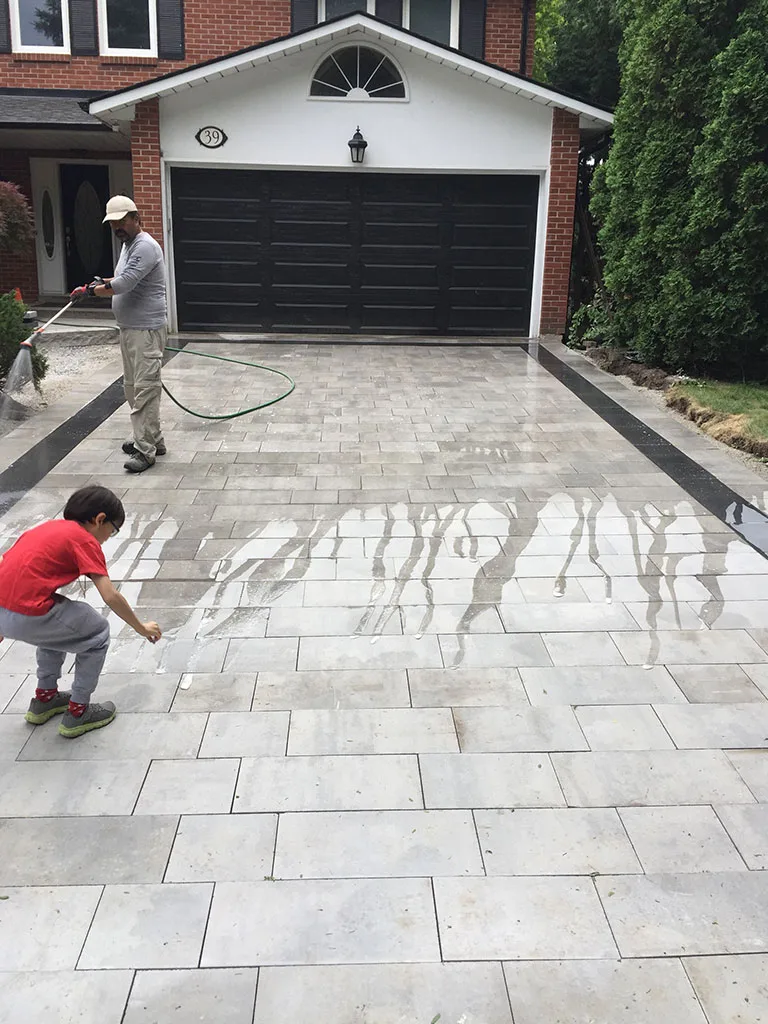
What Is an Interlocking Driveway?
An interlocking driveway is built using individual pavers — typically made from concrete, natural stone, or clay — that fit tightly together to form a solid surface. What makes it different from poured concrete or asphalt? Flexibility. Each paver is placed by hand over a prepared base, making it easier to repair or adjust over time.
What Goes Into the Base?
The durability of an interlocking driveway isn’t just about the pavers you see on top. It’s all about what’s underneath:
- Excavated subgrade: Soil is cleared and leveled
- Gravel base layer: Crushed stone is compacted for strength
- Bedding layer: A fine layer of sand cushions the pavers
- Edge restraints: Keeps everything locked in place
- Joint sand: Swept into the gaps for stability and weed prevention
Pros and Cons of Interlocking Driveways
✅ What You’ll Like
- Design Flexibility: Choose from patterns, colours, shapes, and finishes to suit your home.
- Easy Repairs: You can lift and reset individual pavers instead of tearing up the whole thing.
- Built to Last: Properly installed, these driveways can support heavier vehicles than poured options.
- Better Drainage: Rainwater flows through the joints, helping prevent pooling and runoff.
⚠️ What to Watch For
- Higher Upfront Cost: Interlock usually costs more than asphalt or plain concrete at the start.
- Weeds & Joint Sand: Gaps can invite growth if left unchecked.
- Skilled Installation Matters: A solid base is critical — cut corners here, and you’ll pay for it later.
Comparison: Interlocking vs Asphalt vs Concrete
| Feature | Interlocking Pavers | Asphalt | Poured Concrete |
|---|---|---|---|
| Lifespan | 25–35 years | 12–20 years | 20–30 years |
| Repairs | Easy (replace 1-2) | Cracks seal, full resurface | Prone to cracks |
| Drainage | Excellent (permeable) | Poor | Moderate |
| Design | Highly customizable | Very limited | Some finishes |
| Cost per sq ft | $18–$25+ | $6–$10 | $10–$16 |
Related article: Interlocking vs Concrete – What to Choose
How Much Does an Interlocking Driveway Cost in Ontario?
In 2026, Ontario homeowners can expect to pay $18–$25+ per square foot for an interlocking driveway. That number varies based on material choice, the complexity of the design, and site-specific factors like grading or slope.
Sample Pricing
- Small Driveway (1-car): ~$9,000–$14,000
- Medium Driveway (2-car): ~$14,000–$22,000
- Large Driveway (3-car+): $22,000 and up
Optional Add-ons
- Lighting features
- Decorative edging or borders
- Protective sealants
| Driveway Size | Sq Ft Range | Average Cost |
|---|---|---|
| Small (1 car) | 500–600 | $9,000–$14,000 |
| Medium (2 cars) | 700–1,000 | $14,000–$22,000 |
| Large (3 cars+) | 1,200+ | $22,000+ |
*Note: Pricing may vary by location, slope, and site access.
What to Expect During Installation
Here’s what a typical interlocking driveway installation looks like — from first dig to final sweep.
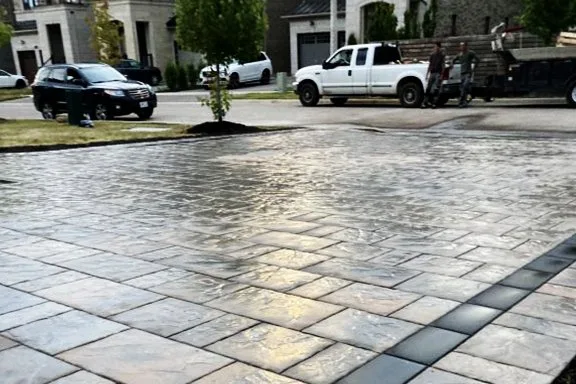
- Excavation – Soil and existing material are removed to the required depth.
- Base Prep – Gravel base is laid and compacted in layers.
- Bedding Sand – A layer of sand is smoothed and leveled.
- Paver Laying – Interlocking stones are installed in the desired pattern.
- Edge Restraints – Border is added to keep pavers locked in.
- Joint Sand – Polymeric or regular sand is swept between the joints.
- Final Compaction – Everything is vibrated and settled into place.
Timeline: 3–7 days depending on weather and site complexity.
How Long Will an Interlocking Driveway Last?
With proper care and solid prep, interlocking driveways last 25 to 35 years in Ontario’s climate.
Factors That Matter:
- Soil & drainage
- Base depth & compaction
- Freeze-thaw resistance
- Sand choice (polymeric resists weeds)
Maintenance Tips for Interlocking Driveways
A little care goes a long way when it comes to keeping your interlocking driveway looking fresh.
Seasonal Tips
- Avoid harsh de-icing salts
- Use plastic shovels for snow
- Reseal every 3–5 years (if needed)
Weed & Sand Care
- Reapply joint sand as needed
- Use polymeric sand to resist growth
Annual Inspection
- Check for shifting or heaving
- Clean stains or oil spots quickly
FAQs for Ontario Homeowners
Q: Can interlocking driveways support trucks or RVs?
Yes — if the base is built deep enough, they can handle heavy loads with no issue.
Q: Can I add lighting or other features?
Absolutely. In-ground lighting is popular and can be integrated along edges.
Q: Does it need sealing?
Optional, but sealing can help preserve colour and block stains.
Q: Will it shift over time?
With proper edging and base prep, shifting is minimal and easily corrected.
Q: Can I DIY this project?
It’s possible for small patios, but for driveways — especially in Ontario’s climate — we recommend hiring pros.
Is an Interlocking Driveway Right for You?
They’re not the cheapest option up front, but they’re one of the smartest in the long run — visually, practically, and financially. If you’re looking for a driveway that pulls its weight year after year, interlocking company Shabatin is worth serious consideration.
Get a Free Quote
Get in touch and we’ll get back to you as soon as we can. Looking forward to hearing from you!