
 (647)272-9973
 info@shabatin.ca
Interlocking vs Concrete – What to Choose in Toronto?
by Kate Posted on 04-May-2026
Choosing the right surface for your outdoor spaces is an important decision for any homeowner. Walkways, driveways, and patios all face heavy use, freeze–thaw cycles, and changing ground conditions. Two of the most common options are interlocking pavers and poured concrete.
In this guide, the Shabatin Interlock team breaks down interlock vs concrete in clear terms, covering appearance, cost, durability, and upkeep. Learn more how to make a confident choice that fits your property and how you use it.
What Is Interlock Pavers?
Interlocking pavers are individual concrete or stone units installed over a compacted gravel base and bedding sand. The pavers lock together through their shape and edge restraints rather than relying on a single solid slab. This flexible system is one reason many homeowners prefer concrete vs interlocking pavers for surfaces exposed to Canadian winters.
Interlock is available in a wide range of colours, sizes, and patterns. From clean, linear layouts to more traditional designs, it can be adapted to suit both older homes and newer builds. Because damaged pavers can be removed and replaced individually, repairs are usually localized rather than affecting the entire surface.
At Shabatin, we install interlock in Toronto for multiple applications, including driveways, walkways, and patios, making it a versatile option across your property.
What Is Poured Concrete?
Poured concrete is created by placing wet concrete into a framed area and allowing it to cure into a solid slab. It can be finished in several ways, including broom-finished, exposed aggregate, or stamped patterns that mimic stone.
Concrete is often chosen for its clean look and faster installation process. For homeowners focused on initial budget, concrete installation cost can be lower than interlock, especially for large areas like driveways. However, once concrete cracks, which is common over time, repairs are more visible and often require patching or replacement of sections.
Interlocking or Concrete for Walkway, Driveway, Patio?
Each outdoor space has different demands. Understanding how each material performs in specific areas can help narrow your decision.
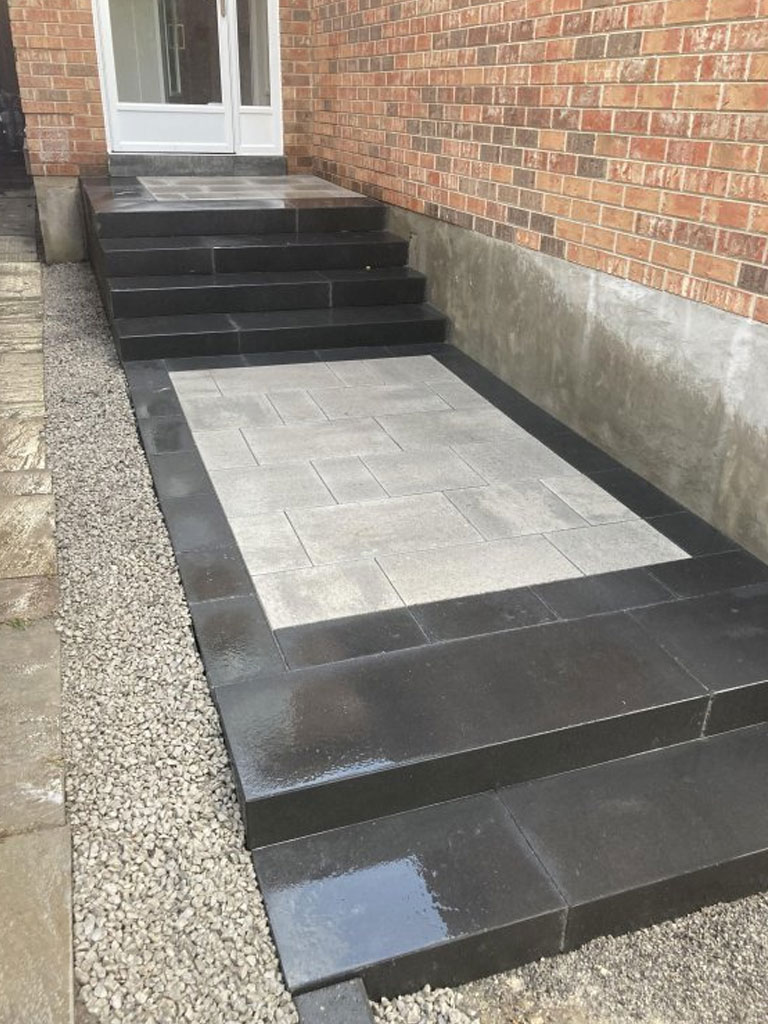
Walkway Interlocking vs Concrete
Walkways are about safety, appearance, and ease of repair. Interlock provides better traction in wet or icy conditions and allows for spot repairs if shifting occurs. For many homeowners comparing interlock vs concrete walkway options, interlock’s flexibility is a strong advantage, especially in areas with tree roots or uneven ground.
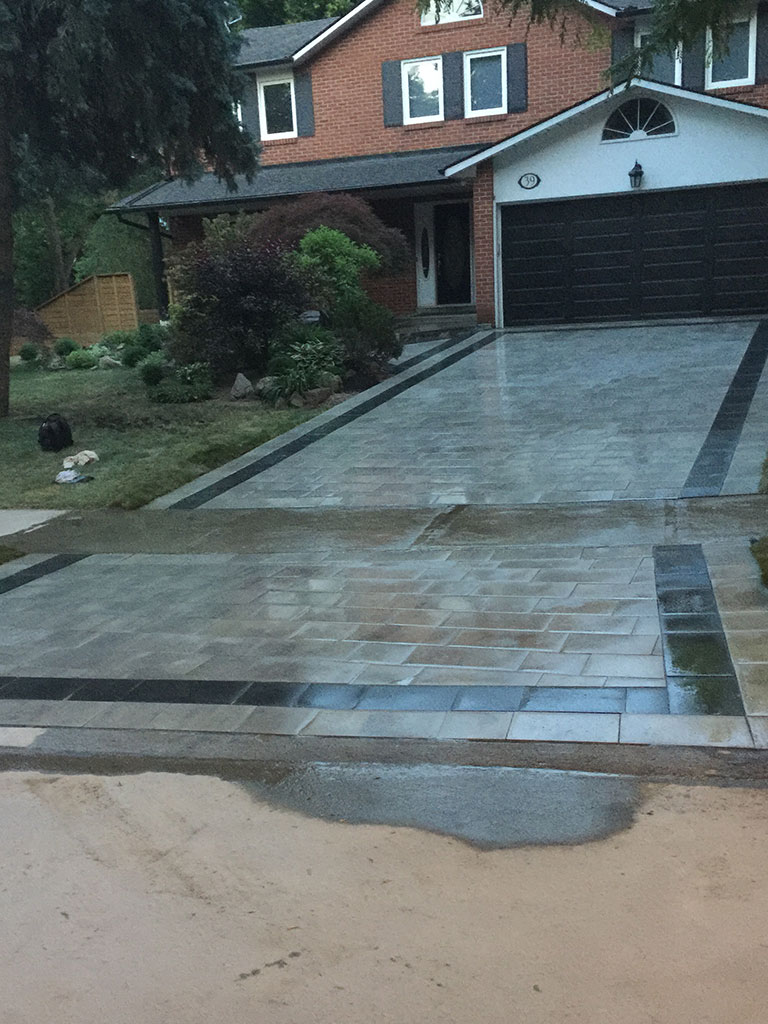
Driveway Interlocking vs Concrete
Driveways experience the most weight and stress. Interlock can handle vehicle loads when installed on a properly prepared base and allows for repairs if settling happens. Concrete driveways can look sharp when new, but cracks are difficult to hide.
When weighing interlock vs concrete driveway options, consider long-term maintenance rather than just upfront price. Interlock may cost more initially, but it can be easier to maintain over decades.
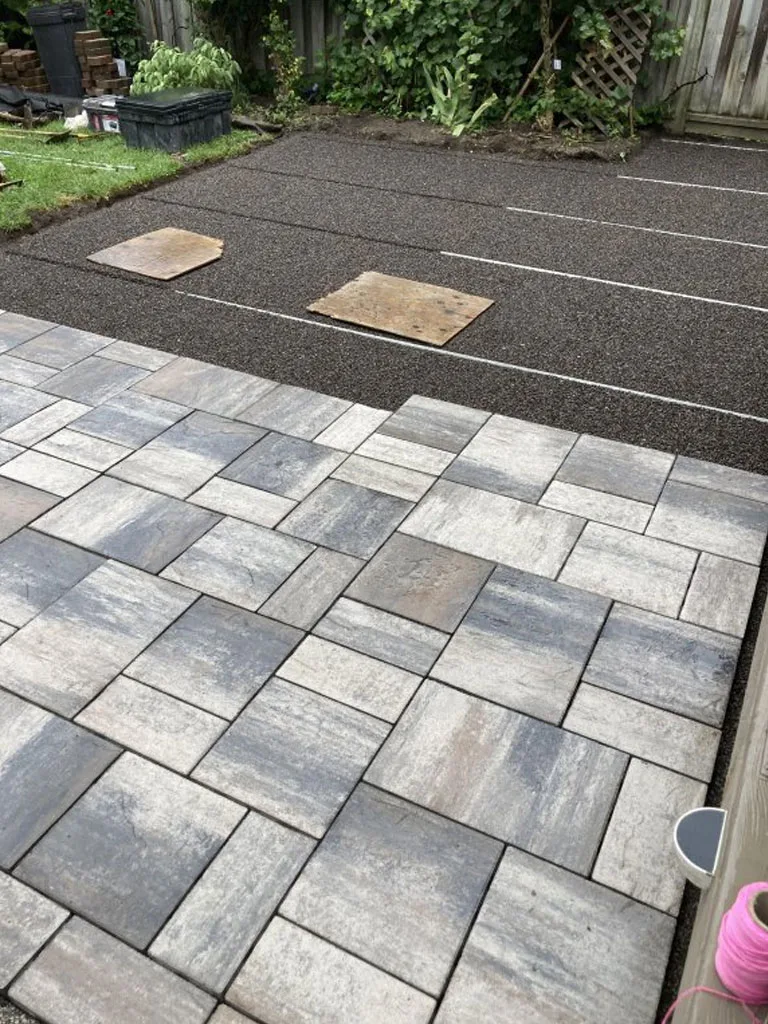
Patio Interlocking vs Concrete
Patios are often the most design-focused space. Interlock offers more flexibility for patterns and future layout changes. Many homeowners comparing interlock vs concrete patio surfaces lean toward pavers for this reason. Concrete patios are simpler and can work well for minimal designs, but they offer less adaptability over time.
Cost Comparison: Interlock vs Concrete
The cost difference is one of the most common questions homeowners ask. The numbers below are average estimates based on industry research and typical GTA conditions. Actual pricing can vary depending on site preparation, access, drainage requirements, and design choices.
| Surface Type | Average Cost per sq. ft. | Notes |
|---|---|---|
Interlocking Pavers | $15–$30 | Includes base prep, pavers, and labour |
Poured Concrete | $10–$20 | Depends on finish and thickness |
Homeowners often ask which is cheaper interlock or concrete. Concrete usually has the lower upfront cost, while interlock may reduce repair expenses over time. When reviewing an interlock vs concrete cost comparison, it helps to think beyond installation and factor in maintenance and lifespan.
Read related article: Interlocking Cost in Toronto 2026 – Complete Guide
Durability & Maintenance Differences
Durability is where the materials truly separate. Interlock systems are designed to flex slightly with ground movement. If settling occurs, pavers can be lifted, the base adjusted, and the surface reset. Maintenance typically involves joint sand replacement and occasional cleaning. Over the long term, interlock installation cost can be offset by easier repairs.
Concrete is rigid. Once it cracks, water can enter and widen damage during freeze–thaw cycles. Repairs often remain visible, and full replacement may be required after years of use. While concrete installation cost may be lower at the start, maintenance challenges can add up.
For homeowners focused on longevity, understanding interlock vs concrete pros and cons is essential before committing to either option.
How to Choose the Right Option for Your Home
The best choice depends on how you use the space, your budget, and your expectations for long-term care. Ask yourself:
If you value design variety and long-term adaptability, interlock is often the better fit. If you prefer a straightforward surface and lower initial expense, concrete may suit your needs. Many homeowners asking is interlock better than concrete ultimately decide based on how long they plan to stay in their home and how much maintenance they are comfortable with.
Patio Paving Options
There is no one-size-fits-all answer when comparing interlock and concrete for walkways, driveways, and patios. Each material has strengths, and the right choice comes down to performance, appearance, and long-term value. For homeowners in the GTA looking for guidance on best material for patio or driveway, working with an experienced interlocking contractor can make the decision much clearer.
If you’re considering interlock for your driveway, walkway, or patio, Shabatin can help you evaluate your options and plan a surface that suits your home and property. Reach out today to discuss your next interlocking project and get started with confidence.
Get a Free Quote
Get in touch and we’ll get back to you as soon as we can. Looking forward to hearing from you!