
 (647)272-9973
 info@shabatin.ca
Flagstone Walkway Installation – Cost, Benefits and Design Tips
by admin Posted on 31-Jan-2026
Flagstone walkways are stepping back into the spotlight — and for good reason. With their timeless, organic look and sturdy reputation, they’re becoming a popular choice for homeowners across Ontario in 2026. Whether you’re building out a garden path, upgrading your front entrance, or refreshing a patio, natural stone delivers the kind of character that concrete just can’t fake.
But with so many hardscaping materials out there, it’s tough to pick one that holds up year-round without constant upkeep. In this post, we’ll walk you through everything you need to know about flagstone walkway installation — from stone types and cost breakdowns to installation tips, care advice, and FAQs.

What Is Flagstone?
Flagstone refers to a group of flat, natural stones — usually sedimentary — that are commonly used for outdoor surfaces like walkways and patios. What sets them apart? Their irregular, fractured look and natural split face, which gives each stone a one-of-a-kind texture and shape.
Common Types of Flagstone:
- Sandstone – Warm-toned, earthy colours; moderately porous
- Slate – Dense and darker; rich in texture
- Bluestone – Strong and cool-toned; often from quarries in the northeast
- Quartzite – Durable and slightly sparkly
- Limestone – Soft greys and creams; lighter underfoot
Flagstone brings a raw, earthy vibe to outdoor spaces — which is exactly what makes it a favourite for natural stone walkways and irregular pavers in gardens, entryways, and patios.
Benefits of a Flagstone Walkway
🌿 Natural Aesthetic
Each stone is unique — no cookie-cutter feel. Blends effortlessly into gardens and wooded areas.
💪 Built for Longevity
With the right prep and base, flagstone can last decades. Handles Ontario’s freeze-thaw cycles well.
🧹 Easy Upkeep
Doesn’t crack like poured concrete. Occasional sweeping or rinsing is usually enough.
💧 Good Drainage
Dry-laid stone allows rain to drain through gaps. Reduces puddling and surface runoff.
👣 Safe Underfoot
Textured surface = natural grip (even when wet).
🔄 Layout Options
Random pattern, mosaic, or simple stepping stones. Can curve around garden beds or slope with terrain.
🏡 Best For: Front walkways, garden trails, side-yard paths, patios, and natural-style landscaping
Flagstone vs. Pavers or Concrete: Which Is Better?
Let’s break it down:
| Feature | Flagstone | Pavers | Concrete |
|---|---|---|---|
| Aesthetic | Natural, unique | Uniform | Clean, modern |
| Cost | $$–$$$ | $–$$ | $ |
| Lifespan | 20–30+ years | 15–25 years | 10–20 years |
| Maintenance | Low | Moderate | Can crack |
| Slip Resistance | High | Medium | Low (when wet) |
Bottom Line: Flagstone wins on looks and longevity — but it does come with a higher upfront price.
How Much Does a Flagstone Walkway Cost?
Here’s what Ontario homeowners can expect to pay in 2026:
🧱 Material Cost:
- $15–$30 per sq ft (for quality flagstone slabs)
🛠 Installed Cost:
- $35–$60 per sq ft (includes base prep, layout, and labour)
What Affects the Price?
- Stone type and thickness
- Curves or tight spaces in your layout
- Prep work (excavation, grading)
- DIY vs pro installation
How to Install a Flagstone Walkway (Professional Process)
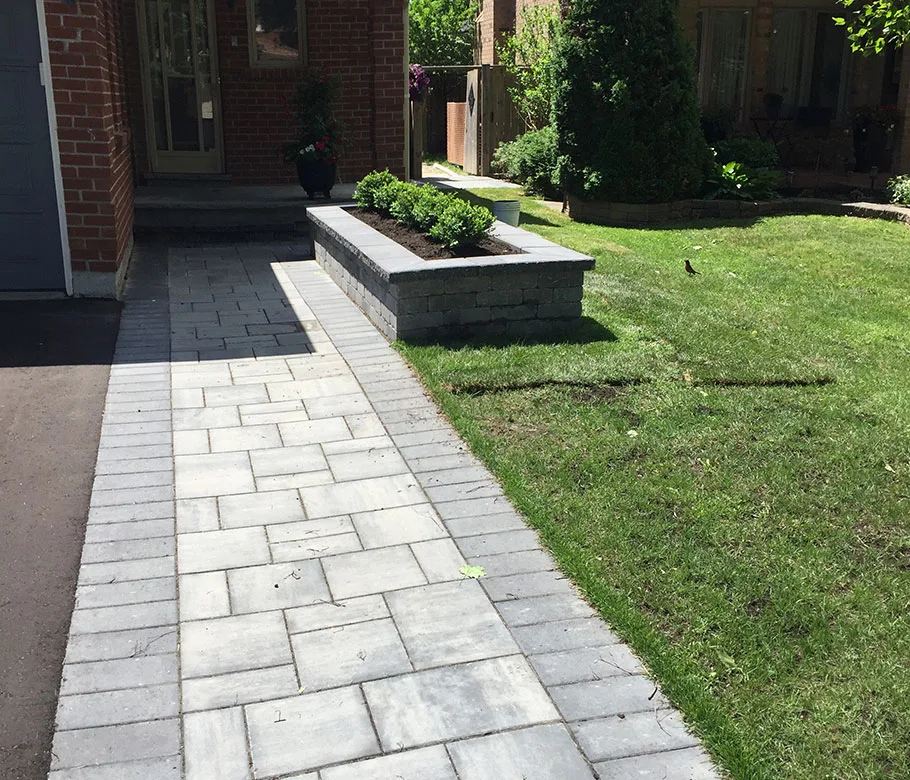
Here’s how our team typically installs a flagstone path:
- Planning & Marking
– Outline the walkway’s curves, edges, and width - Excavation
– Dig out 4″–8″ depending on base depth required - Base Prep
– Add gravel for drainage, followed by sand or stone dust - Stone Layout
– Dry-fit the flagstone for best layout
– Or use mortar for fixed settings - Joint Fill
– Sweep polymeric sand, gravel, or ground cover into gaps - Final Compaction
– Use a rubber mallet or plate tamper - Optional Seal
– Especially helpful in high-traffic or stained areas
Flagstone Maintenance Tips
Taking care of a flagstone walkway is refreshingly simple — especially compared to concrete or asphalt.
Seasonal Maintenance:
- Sweep leaves and dirt regularly
- Hose it down every few weeks in summer
Weed Control:
- Use polymeric sand or gravel to reduce growth
- Edge your path to prevent grass creeping in
Resealing (Optional):
- Every 3–5 years if you seal your stone
- Choose breathable sealers made for natural stone
Winter Tips:
- Avoid rock salt — use sand or calcium chloride
- Flagstone holds grip well but clear snow regularly
Is Flagstone Right for Your Property?
Best Fits:
- Homes with rustic, cottage, or craftsman character
- Garden settings with trees, flowerbeds, or natural slope
- Uneven or sloped yards (great for stepping stone layouts)
Might Not Be Ideal If:
- You want a very minimal, polished look
- Your budget is tight — natural stone is an investment
Common Flagstone Walkway Questions (FAQ)
Q: How long does flagstone last?
A: Easily 20–30 years — more with proper care and installation.
Q: Is it slippery when wet?
A: No. Flagstone has a textured, grippy surface that stays safe underfoot.
Q: Can I DIY a flagstone walkway?
A: Smaller stepping stone paths, yes. Larger installs? You’ll want a pro for grading and base compaction.
Q: What’s the best base for flagstone?
A: Crushed gravel base topped with stone dust or sand — it allows for drainage and flexibility.
Q: Should I seal my walkway?
A: Optional. It protects against stains and makes cleaning easier, but natural stone looks great either way.
Our Flagstone Installation Services in Ontario
We’ve been installing custom stone walkways and patios across Toronto, Mississauga, Etobicoke and the GTA for over 20 years. Flagstone experts from Shabatin Interlock can help you choose the right stone, plan the layout, and build a walkway that will last for decades.
Get a Free Quote
Get in touch and we’ll get back to you as soon as we can. Looking forward to hearing from you!