
 (647)272-9973
 info@shabatin.ca
Interlocking Cost in Toronto 2026 – Complete Guide
by Kate Posted on 03-Jun-2026
Interlocking projects across Toronto continue to see pricing changes in 2026 due to higher material costs, labour demand, fuel pricing, and supplier lead times. Homeowners comparing quotes are noticing wider pricing gaps between basic interlock installations and higher-end projects using premium stone or custom layouts. The lowest quote does not always reflect the long-term value of the installation, especially when base preparation, drainage, and material quality vary from contractor to contractor.
Understanding the interlocking cost per square foot in Toronto helps homeowners plan realistically while comparing installation quality, durability, and expected maintenance costs over time. Let’s dive in.
2026 Interlocking Price Per Square Foot Breakdown
The interlocking price per sq ft in Toronto depends on the material selected, the complexity of the layout, site access, and the amount of preparation required before installation begins. Driveways generally cost more than patios because they require deeper excavation and a stronger base capable of supporting vehicle traffic.
Below is a general 2026 pricing guide for residential projects in Toronto.
| Project Type | Standard Pavers | Mid-Range Pavers | Premium / Natural Stone |
|---|---|---|---|
| Patio Interlocking | $18–$25 per sq ft | $25–$40 per sq ft | $40+ per sq ft |
| Driveway Interlocking | $20–$28 per sq ft | $30–$45 per sq ft | $45+ per sq ft |
| Interlocking Walkways & Small Areas | $18–$24 per sq ft | $24–$38 per sq ft | $40+ per sq ft |
Standard Pavers
Standard interlocking pavers remain the most budget-conscious option for homeowners focused on functionality and curb appeal. These projects typically use basic stone shapes, straightforward layouts, and standard colour options. The interlock installation cost for standard pavers is usually lower because installation time and material costs are more predictable.
Mid-Range Pavers
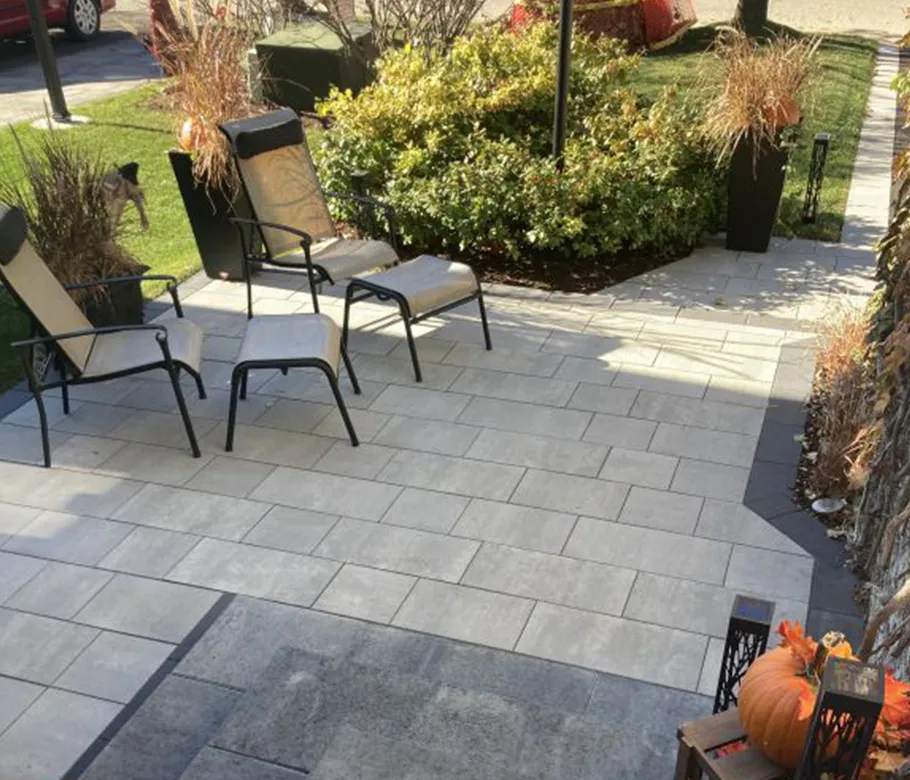
Mid-range projects often include upgraded textures, mixed colour blends, borders, accent features, or more detailed laying patterns. These installations require additional labour and more time for cutting and layout work.
Premium and Natural Stone
Premium installations using natural stone or large-format slabs sit at the higher end of the market. The interlock stone price for these materials is significantly higher, and installation requires experienced crews familiar with specialty products and advanced grading techniques.
For homeowners asking how much does interlock cost in 2026, the answer depends heavily on both the product selected, and the preparation work hidden beneath the surface.
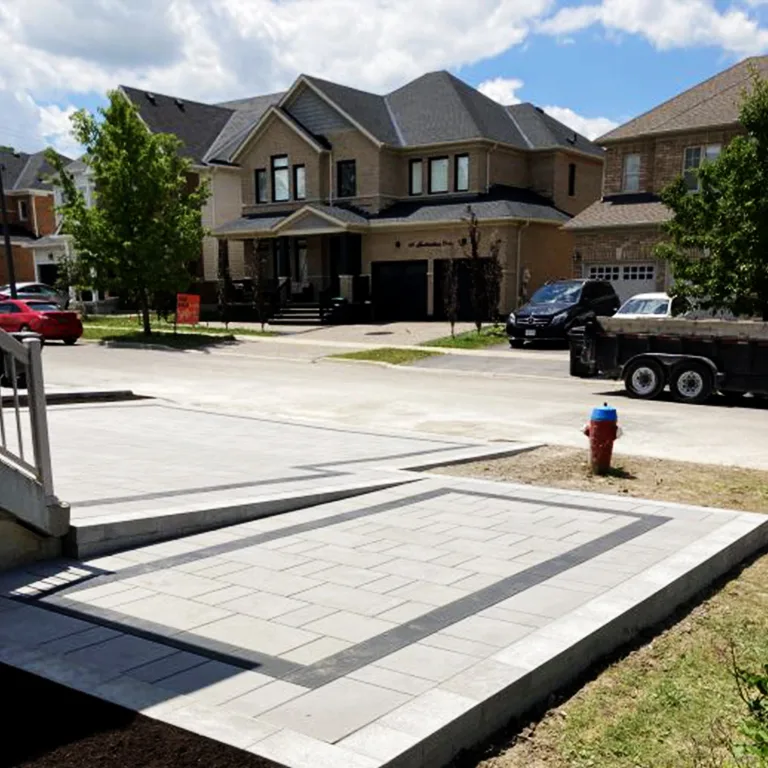
The “Hidden” Cost Drivers
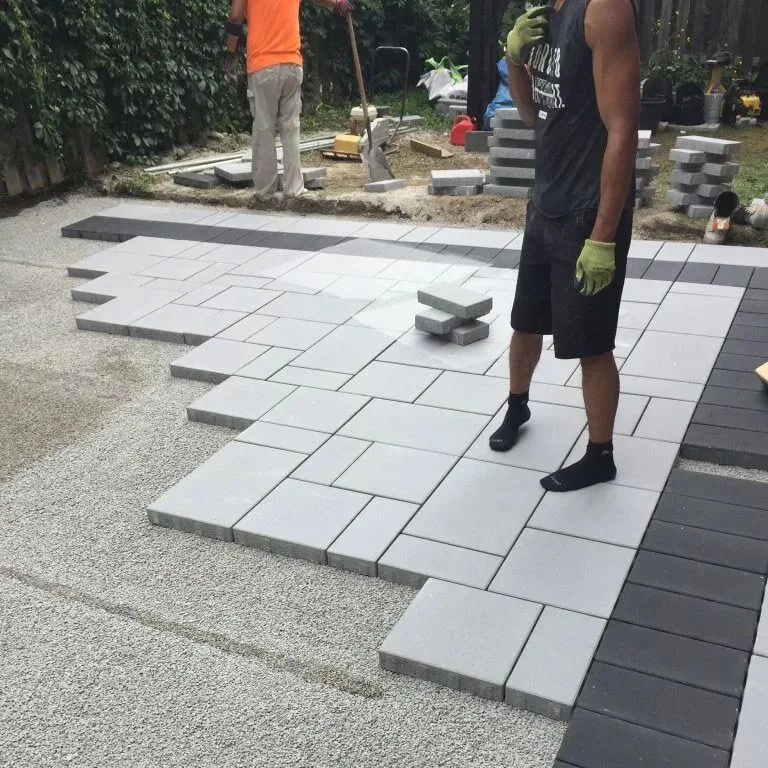
Many homeowners compare quotes based only on visible stone products, but a large portion of project cost comes from what happens below the surface.
Size of Project and Location
Project size has a direct impact on pricing. Smaller projects can sometimes cost more per square foot because equipment, labour, and delivery costs are spread across less surface area. Larger driveways and backyard projects often benefit from better pricing efficiency, although overall project totals are naturally higher.
Location also affects pricing. Properties in dense urban areas may involve restricted access, permit requirements, limited staging space, or additional disposal costs. Sloped properties and homes with difficult excavation access may also require extra labour or specialized equipment.
The interlock driveway cost in Toronto can vary significantly between suburban and urban properties depending on grading conditions, drainage requirements, and accessibility. The same applies to interlocking backyard cost estimates, especially when retaining walls, steps, or outdoor living features are included in the design.
Excavation Depth
Excavation depth is one of the biggest technical cost factors. Driveways require a deeper and more stable base than patios or walkways because they must support vehicle loads throughout freeze-thaw cycles. Poor excavation often leads to sinking, shifting, and drainage problems within a few seasons.
Soil Disposal Fees
Soil disposal fees have also increased across Toronto in recent years. Removing excavated soil, broken concrete, or old asphalt can add noticeable cost depending on the volume and disposal location.
Specialized Drainage
Drainage work is another major factor. Some projects require additional grading, channel drains, or permeable base systems to manage water movement properly. While these upgrades increase upfront pricing, they can help reduce long-term repair costs caused by standing water or frost movement.
Material Trends Affecting 2026 Costs
One of the biggest trends affecting the cost of interlocking pavers in 2026 is the growing demand for permeable systems and environmentally conscious materials.
Permeable Pavers
Permeable pavers are designed to allow water to drain through joints and into the ground below rather than flowing directly into storm systems. By choosing this material, you can save on upfront costs since storm systems often require specialized base materials and more detailed installation methods.
Traditional Stone
Traditional interlocking stone remains the most common option for residential projects because of its familiar appearance, broad product selection, and lower initial pricing. However, homeowners dealing with drainage concerns or areas prone to water pooling are increasingly considering permeable options despite the higher starting cost.
Material availability is also influencing pricing. Some imported stone products continue to experience supplier delays and fluctuating freight costs, especially for premium textures and oversized slabs. Booking materials earlier in the season has become more important in 2026, particularly for custom projects or larger driveway installations.
For homeowners focused on long-term value, spending more upfront on proper drainage materials and durable stone products often results in fewer maintenance concerns later.
Why DIY Interlocking Often Costs Double?
Many homeowners consider installing interlock themselves after comparing contractor pricing online. At first glance, the savings can appear substantial. In reality, DIY interlocking projects often end up costing more once repairs, regrading, and material replacement are factored in.
The most common issue is poor base preparation. After installation, a driveway or patio may look level immediately, but if the base is not compacted properly or the excavation depth is insufficient, the surface can begin sinking or shifting after the first winter.
Drainage mistakes are another frequent problem. Water that pools near the home or beneath the pavers can accelerate movement and frost-related damage. Fixing these issues often requires removing large sections of the installation and rebuilding the base entirely.
Many homeowners also underestimate the equipment and labour involved. Excavation, compaction, grading, cutting stone, and hauling materials require experience and specialized tools.
Professional installations focus heavily on the structural work beneath the stone surface. That preparation is what largely determines how the project performs five or ten years later.
Long-Term Value Starts with Proper Planning
Interlocking projects remain one of the most valuable exterior upgrades for homeowners in Toronto when installed correctly and planned with long-term performance in mind. While pricing in 2026 continues to rise due to labour demand, material costs, and supplier scheduling, a properly built driveway or patio can provide decades of durability with relatively low maintenance requirements.
Planning ahead has also become more important. Many contractors now schedule major projects months in advance during peak spring and summer seasons, especially for larger driveways and premium stone installations. Waiting until the busiest part of the season can limit material availability and installation timing.
If you’re considering a new patio, driveway, or outdoor living space, we here at Shabatin Interlock can help identify grading conditions, drainage requirements, and material options before construction begins. Working with our experienced contractors can also help prevent the long-term repair costs often associated with improper installation practices. Contact us today.
FAQs
Yes. Certain colours, textures, and blended finishes cost more due to manufacturing processes and material availability. Premium colour options and imported products generally increase the final project price.
A standard two-car interlock driveway cost typically ranges from approximately $14,000 to $30,000+ in Toronto depending on the size, material selection, excavation requirements, and layout complexity.
In most cases, sealing is priced separately. We recommend waiting several months after installation before applying a sealer so the pavers and joint sand can settle properly.
This is usually not recommended. Improper excavation depth or grading can create major drainage and settling problems later. We prefer handling excavation directly because it affects the overall performance of the installation.
Standard poured concrete may have a lower upfront price in some cases, but interlocking systems are generally easier to repair and maintain over time. Individual pavers can be replaced without removing the entire surface.
Read related article: Interlocking vs Concrete – What to Choose in Toronto?
Get a Free Quote
Get in touch and we’ll get back to you as soon as we can. Looking forward to hearing from you!