
 (647)272-9973
 info@shabatin.ca
Interlocking Design Ideas for Driveway, Backyard, Patio 2026
by Kate Posted on 10-Aug-2026
In 2026, interlocking design focuses on clean layouts, practical surfaces, and materials that work well across patios, backyards, and driveways. Interlocking pavers allow you to create flexible spaces, clear transitions between areas, and long-lasting surfaces when installed properly. From subtle stone blends to bold pattern contrasts, you can choose layouts that suit both modern and traditional homes.
In this guide, we share current interlocking patio ideas, backyard layouts, and interlocking driveway designs that reflect how outdoor spaces are being planned today. If you want to improve access, define gathering areas, or create stronger curb appeal, a thoughtful interlocking design can help tie your entire property together.
Interlocking Patio Ideas
Today’s paver patio designs prioritize clean geometry and defined edges. Large-format pavers arranged in linear or modular layouts create a smooth surface that works well for seating, dining, and walkways.
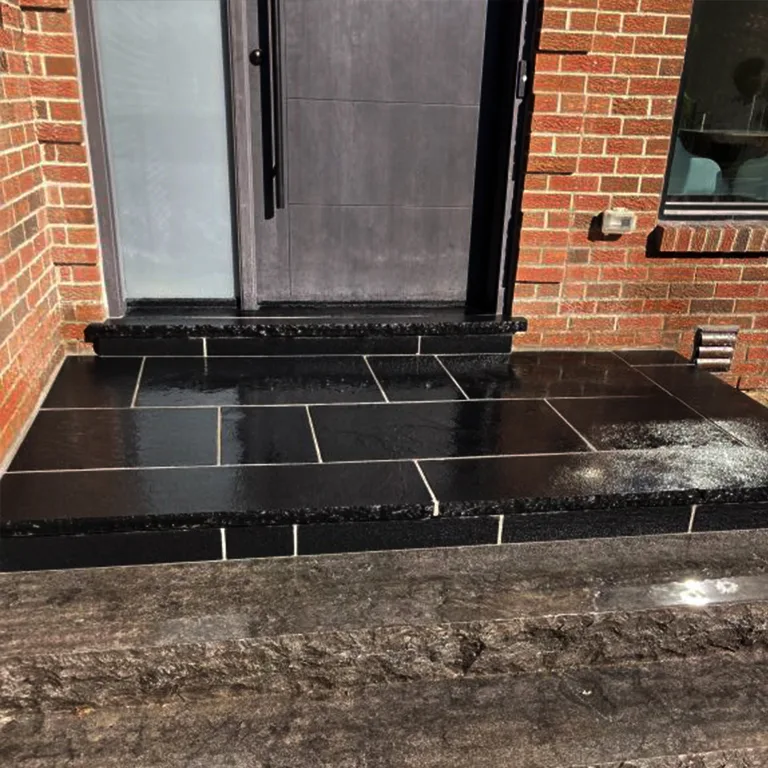
In this entryway design, dark-toned interlocking pavers are used to create a clean and structured landing area in front of the door. The rectangular stones are arranged in a linear pattern, while a darker border frames the steps and highlights the transition from the walkway to the entrance.
This type of layout works well for smaller patios, front entrances, or seating areas where you want a defined surface that complements the surrounding architecture.
In this patio design, grey-toned pavers are arranged in a clean rectangular layout with a darker border outlining the edge of the surface. The contrasting border helps frame the patio and gives the entire area a structured appearance.
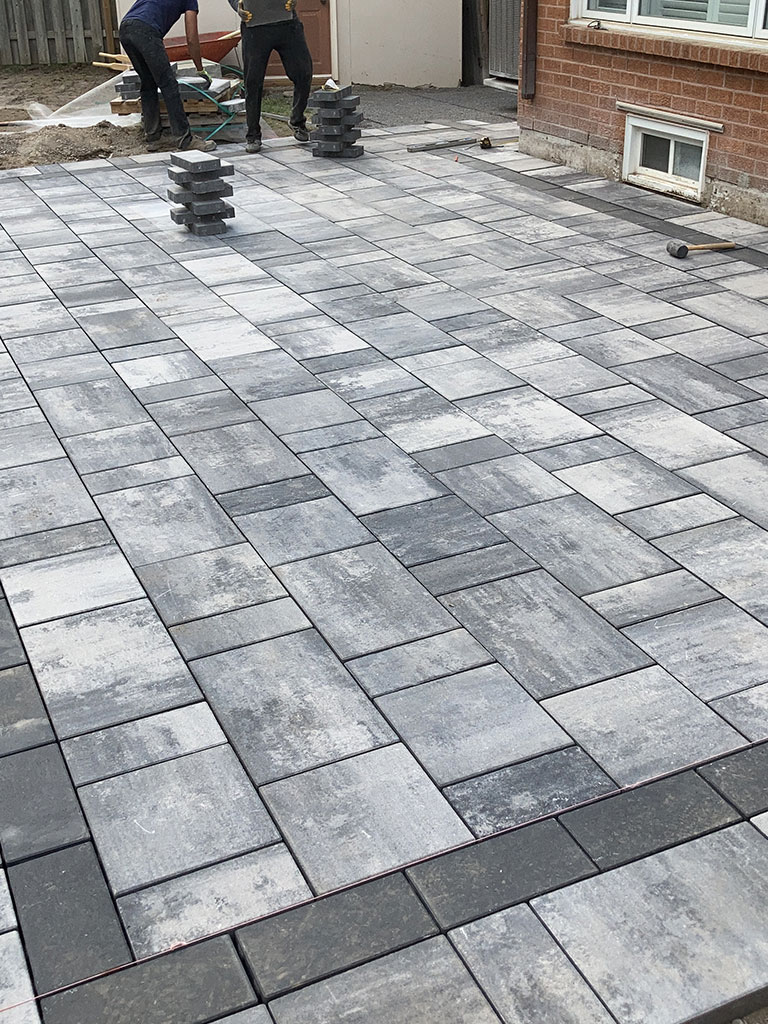
A couple favourite interlocking stone patterns for patios include random rectangular layouts and offset grid designs. These patterns create movement while keeping the overall layout balanced. If you prefer a structured finish, subtle colour blends in greys and charcoals work well and pair easily with outdoor furniture and surrounding landscaping.
For smaller patios, lighter-toned pavers can help your space feel more open. In larger areas, darker borders or inset bands help break up wide surfaces. Circular paver patterns are sometimes used as focal points beneath fire tables or seating zones, adding visual interest without taking over the layout.
Backyard Interlocking Applications
Backyards in 2026 are often planned with multiple functional zones. Interlocking pavers help you separate those areas in a clear and organized way. Walkways, seating pads, and open lounging spaces can all be created using the same paver style while changing the layout or border details.
Straight-line interlocking brick patterns work well for walkways that connect patios to sheds, pools, or garden areas. These layouts provide stable footing and guide movement through the space. For seating areas, larger pavers arranged in a staggered layout create a smooth surface that is easy to maintain.
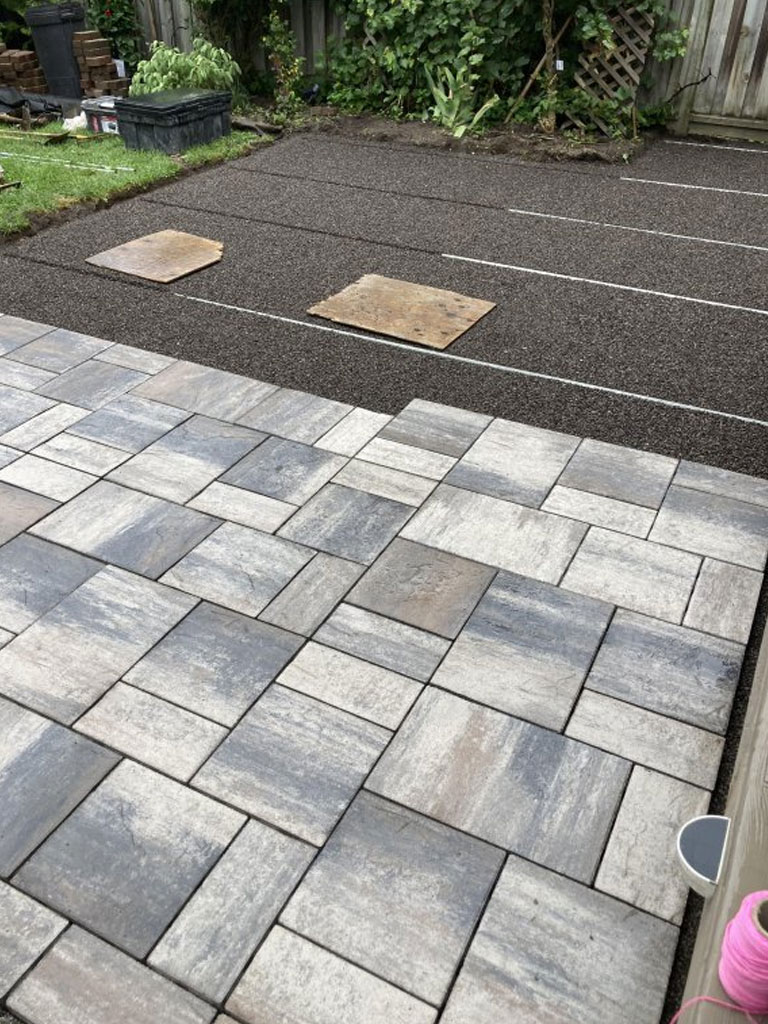
In this backyard installation, large rectangular and square pavers are arranged in a modular pattern using soft grey colour blends. The varied stone tones create visual depth while maintaining a balanced surface that works well for patios or lounging areas.
This type of paver patio design provides a smooth surface for outdoor furniture while still blending naturally with surrounding landscaping.
In this layout, backyard interlocking pavers form a walkway that connects different areas of the yard. The stones follow a straight pattern that naturally leads from the patio toward the surrounding garden space.
You may also consider adding subtle elevation changes. Small retaining edges paired with interlocking steps help separate dining areas from open lawn or garden zones. This helps organize the space while keeping the layout easy to move through.
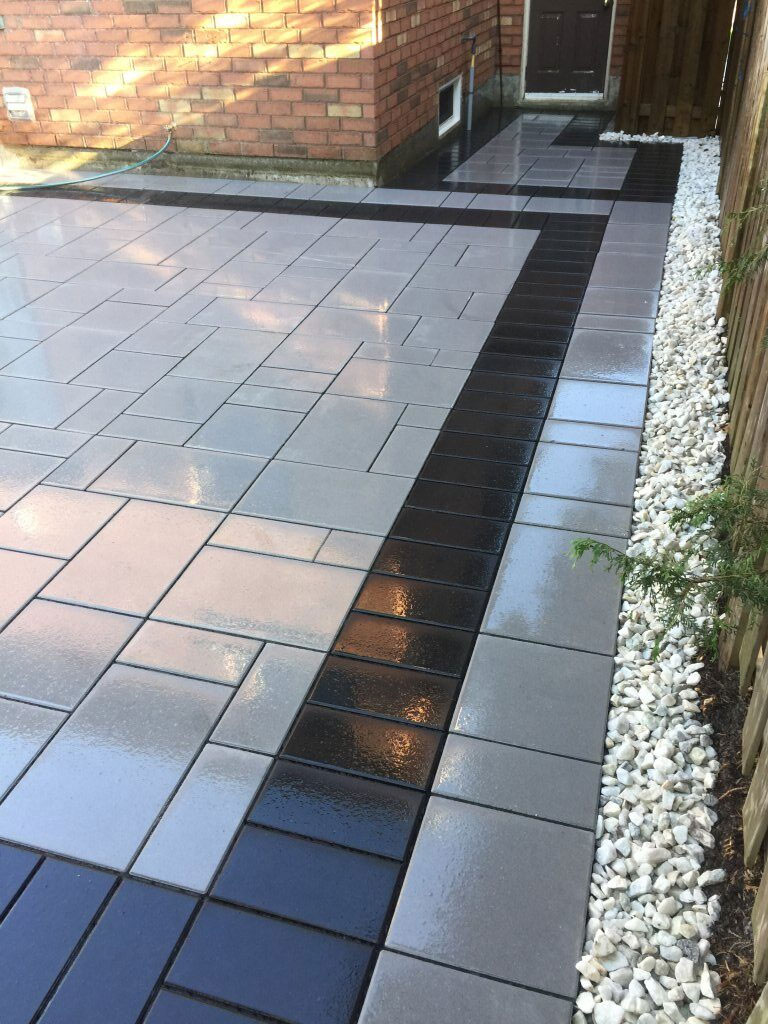
Colour selection is usually kept neutral so plants and outdoor features stand out more. Soft grey blends remain popular, while darker accents are used sparingly to frame key areas. These concrete paver designs help maintain consistency across your yard without making the space feel overly structured.
Overall, backyard interlocking focuses on balance. The layout stays open and practical while still creating clearly defined spaces you can use throughout the season.
Interlocking Driveway Designs
Driveways continue to set the tone for the entire property. In 2026, interlocking driveway designs focus on pairing durability with structured layouts.
One of the most common choices remains herringbone pattern pavers. This pattern helps distribute vehicle weight effectively while keeping the surface stable over time.
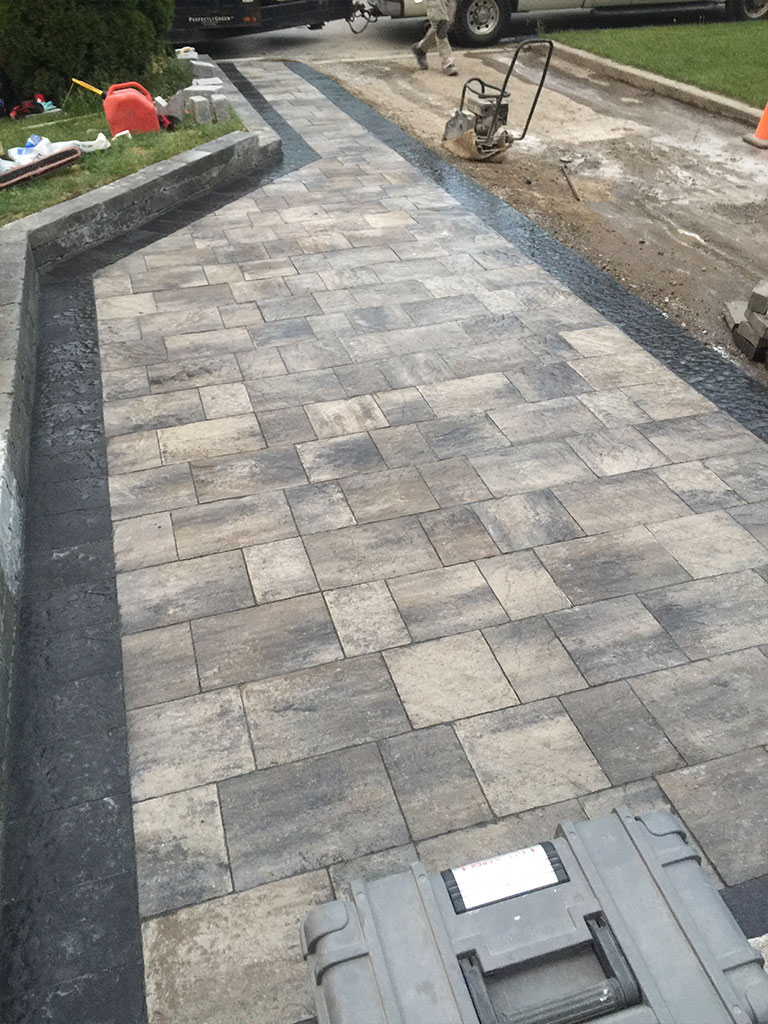
In this driveway design, rectangular grey pavers are installed in a structured pattern with subtle tone variations. The layout creates a clean surface, while the stone texture adds visual depth across the driveway.
For wider driveways, rectangular pavers laid in a modular pattern help reduce visual bulk. Borders in darker tones clearly define edges and separate the driveway from walkways or landscaping. These driveway paver ideas work well with both modern and transitional homes.
If you have a longer driveway, repeating patterns can help guide the eye toward the home. Interlocking walkway ideas are often incorporated alongside the driveway using the same pavers. This keeps the entire front area visually connected.
Drainage should also be considered during the design phase. Proper slopes combined with base preparation help prevent water from collecting on the surface. In some cases, permeable pavers are used in secondary parking areas to support water movement while still providing a strong surface.
These modern interlocking designs balance function and appearance, giving you a driveway that handles daily use while fitting naturally into the layout of your property.
Interlock Installation & Maintenance Tips
Even the best layout relies on proper installation. A well-prepared base, correct grading, and secure edge restraints all help support long-term performance.
Working with experienced installers helps prevent shifting or uneven settling over time. Routine maintenance is fairly simple. Occasional sweeping, rinsing, and joint sand touch-ups help keep the surface looking neat. Avoid harsh cleaners that could affect the stone colour. Addressing small issues early helps maintain alignment and appearance.
With proper installation and basic upkeep, interlocking pavers can continue performing well across patios, backyards, and driveways for many years.
FAQs
Herringbone layouts are commonly used for driveways because they distribute weight effectively and resist movement.
Yes. You can also opt for lighter colours and a clean layout to help your space feel more open and organized.
With proper installation and routine care, interlocking pavers can last for decades.
Yes. Borders, accents, and varied layouts can be combined for contrast. We often mix different paver styles within one project while keeping the overall design consistent.
Permeable pavers require occasional cleaning to keep the joints clear, but general maintenance is similar to standard pavers.
Final Thoughts
Interlocking designs continue to evolve with a focus on clean layouts, practical surfaces, and long-term usability. When you plan the layout carefully, patios, backyards, and driveways can work together to create a well-organized outdoor space.
At Shabatin Interlock, we help you explore the most popular interlocking design ideas for 2026 and choose the paver layout that fits your property. If you are planning an outdoor upgrade, contact our team today to help you determine the best approach for your space.
Get a Free Quote
Get in touch and we’ll get back to you as soon as we can. Looking forward to hearing from you!